


Religious Tours
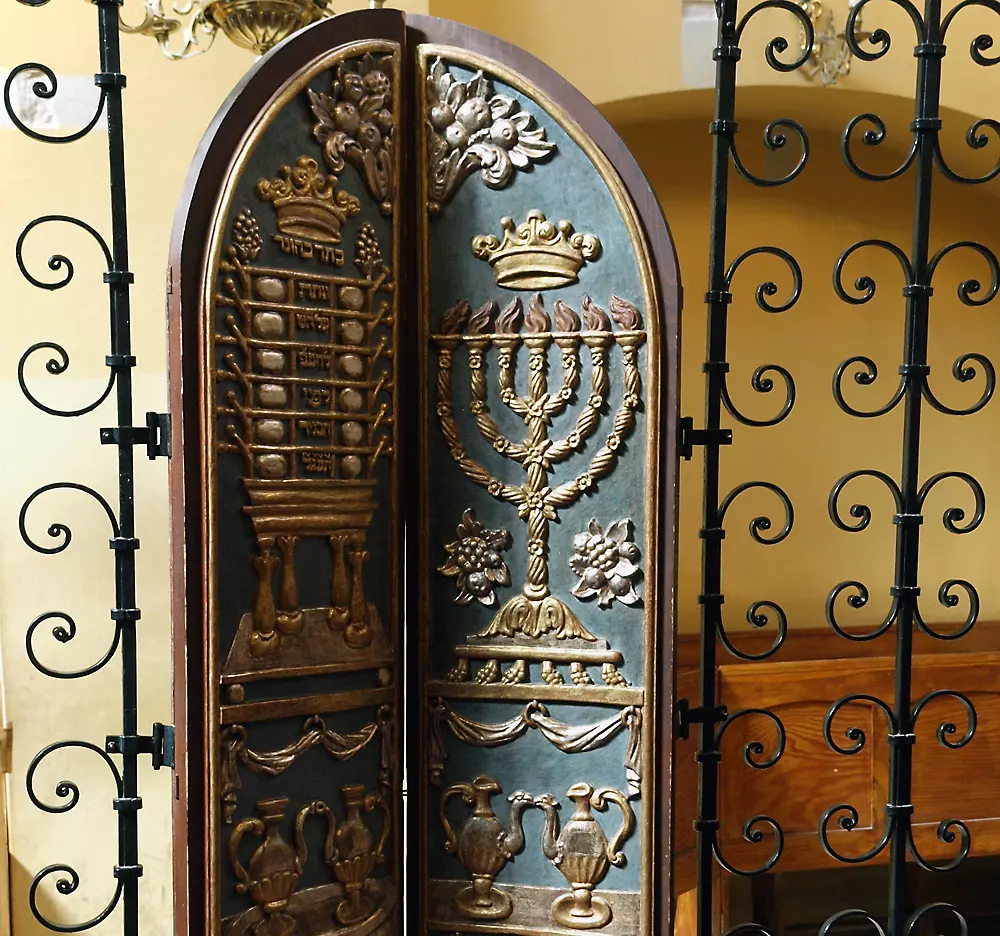
Discover spiritual destinations related to Roman Catholic, Protestant and Jewish heritage.
Contact us
If you want us to prepare a special trip for you, please write us specifying all your requirements. We will be happy to answer.
Religious tours in Poland – a journey through faith, history, and identity
Religious tours in Poland are not simply about visiting churches or historical landmarks. They are immersive experiences that connect travellers with centuries of spiritual tradition, cultural transformation, and deeply human stories. This is a country where religion has shaped identity on both a national and personal level, leaving visible traces in architecture, art, and everyday life.
Choosing Poland as a destination for a religious journey means entering a space where faith is still alive, not just preserved. It is a place where sacred sites are not museum pieces, but active parts of communities, where rituals continue, and where history is felt rather than just observed. This creates a travel experience that is both reflective and intellectually engaging.
A country shaped by faith, resilience, and cultural diversity
Poland’s religious landscape is the result of centuries of transformation, conflict, coexistence, and rebuilding. Catholicism plays a dominant role in shaping national identity, but the country’s past also includes one of the most significant Jewish communities in Europe, as well as influences from other religious traditions.
Travelling through Poland reveals this complexity in a natural way. Gothic cathedrals stand alongside Renaissance churches, while traces of Jewish heritage can be found in historic districts, cemeteries, and restored synagogues. These elements do not exist in isolation – they form a layered narrative that reflects both cultural richness and historical depth.
This duality makes religious tours in Poland particularly meaningful. Visitors are not presented with a single perspective, but with a multifaceted story that invites deeper understanding and reflection.
Following the path of Saint John Paul II
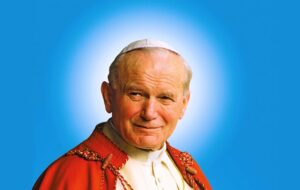
One of the most powerful aspects of religious travel in Poland is the opportunity to explore the life and legacy of Saint John Paul II. His influence extends far beyond religion, shaping global dialogue, political change, and cultural identity.
Visiting locations connected to his life provides more than historical context. It allows travellers to understand the environment that formed his worldview and the values that guided his leadership. These places often evoke strong emotional responses, creating moments of reflection that go beyond typical sightseeing.
For many visitors, this part of the journey becomes a central experience. It bridges personal reflection with historical awareness, making the trip both meaningful and memorable.
Discovering Jewish heritage and historical memory
Poland’s role as a historical centre of Jewish life adds a profound dimension to religious tours. Before World War II, the country was home to one of the largest and most vibrant Jewish populations in the world. Today, this legacy is preserved through carefully maintained sites and educational initiatives.
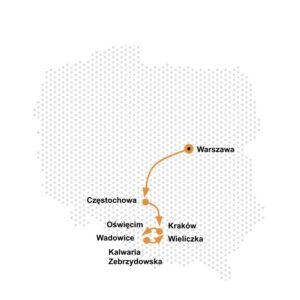
Exploring cities such as Kraków and Warsaw reveals a narrative that includes both cultural flourishing and immense tragedy. Former Jewish districts, synagogues, cemeteries, and memorial sites provide insight into daily life, traditions, and the resilience of communities that shaped Polish history.
This part of the journey often becomes one of the most impactful. It encourages visitors to engage with history on a deeper level, understanding not only events, but also the human experiences behind them.
Religion as a foundation of art, culture, and identity
In Poland, religion has always influenced artistic and cultural expression. This connection is visible in architecture, where churches and basilicas display intricate craftsmanship and symbolic design. It is also present in literature, painting, and music, where religious themes have inspired generations of artists.
Experiencing this cultural dimension adds depth to religious tours. It allows travellers to see how faith extends beyond spiritual practice into everyday life and creative expression. Traditions, festivals, and ceremonies further reinforce this connection, showing how religion continues to shape contemporary culture.
This integration of spirituality and culture creates a richer, more engaging travel experience that resonates on multiple levels.
A structured and meaningful travel experience
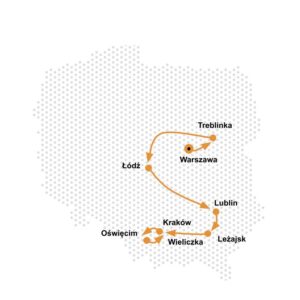
Religious tours in Poland are designed to provide clarity, depth, and continuity. Each itinerary is carefully constructed to guide travellers through key locations while maintaining a logical and engaging flow.
Professional guides play a crucial role in this process, offering context and interpretation that transform individual sites into a cohesive story. At the same time, travellers are given space for personal reflection, allowing them to connect with the experience in their own way.
This balance between structure and freedom ensures that the journey remains both informative and personally meaningful.
Why Poland stands out as a destination for religious travel
Poland offers a rare combination of authenticity, diversity, and accessibility. Religious sites are not isolated attractions but living elements of the cultural landscape. They continue to serve their original purpose while welcoming visitors from around the world.
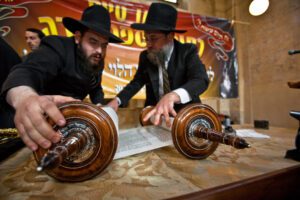
The country’s ability to present both Catholic pilgrimage traditions and Jewish heritage within a single journey makes it particularly unique. Few destinations offer such a comprehensive perspective on European religious history in one place.
In addition, Poland’s welcoming atmosphere and well-developed infrastructure make it an accessible and comfortable destination for travellers seeking meaningful experiences.
A journey that continues beyond the trip
Religious tours in Poland often leave a lasting impression that extends far beyond the duration of the visit. The experiences, stories, and reflections gained during the journey continue to influence travellers long after they return home.
This is not a passive form of tourism. It is an active engagement with history, culture, and personal perspective. It encourages deeper thinking, greater awareness, and a stronger connection to the broader human experience.
For those seeking more than a standard travel itinerary, Poland offers a journey that is both intellectually enriching and emotionally resonant.
FAQ – Religious tours in Poland
What is included in a religious tour in Poland?
Religious tours typically include visits to major pilgrimage sites, historic churches, monasteries, and locations connected to important religious figures. Many itineraries also incorporate Jewish heritage sites, providing a broader historical and cultural perspective. Guided experiences ensure that each location is presented with proper context and meaning.
Are these tours suitable for people of different beliefs?
Yes, religious tours in Poland are designed for a wide range of participants. While they focus on spiritual and historical themes, they are equally valuable for travellers interested in culture, history, and identity. The experience is educational and reflective rather than limited to specific religious practices.
When is the best time to take a religious tour in Poland?
Religious tours can be taken throughout the year, but certain periods offer unique experiences. Visiting during major religious holidays or festivals can provide additional cultural insight, while spring and early autumn are often preferred for comfortable travel conditions and fewer crowds.
Do I need to prepare in a specific way for visiting sacred sites?
Visitors are generally expected to dress modestly and behave respectfully when entering sacred spaces. Comfortable clothing, appropriate footwear, and awareness of local customs are recommended. Preparing mentally for a reflective and respectful experience can also enhance the overall journey.
Can religious tours be customised?
Many tours can be adapted to meet specific interests, whether focused on Catholic pilgrimage routes, Jewish heritage, or a combination of both. Customisation allows travellers to create a more personal and meaningful itinerary based on their preferences.
How physically demanding are religious tours in Poland?
The level of physical activity depends on the itinerary. Most tours involve moderate walking, especially in historic areas and pilgrimage sites. However, routes can often be adjusted to accommodate different levels of mobility and comfort.