


Treasures of Central Europe: Poland, Hungary, Slovakia, Austria, Czech Republic, Germany
16 days / 15 nights
Dive into the history and culture of Central Europe: modern Warsaw, historical Krakow, unique Bratislava, charming Budapest, Austria’s imperial capital of Vienna and Prague, the Heart of Europe.
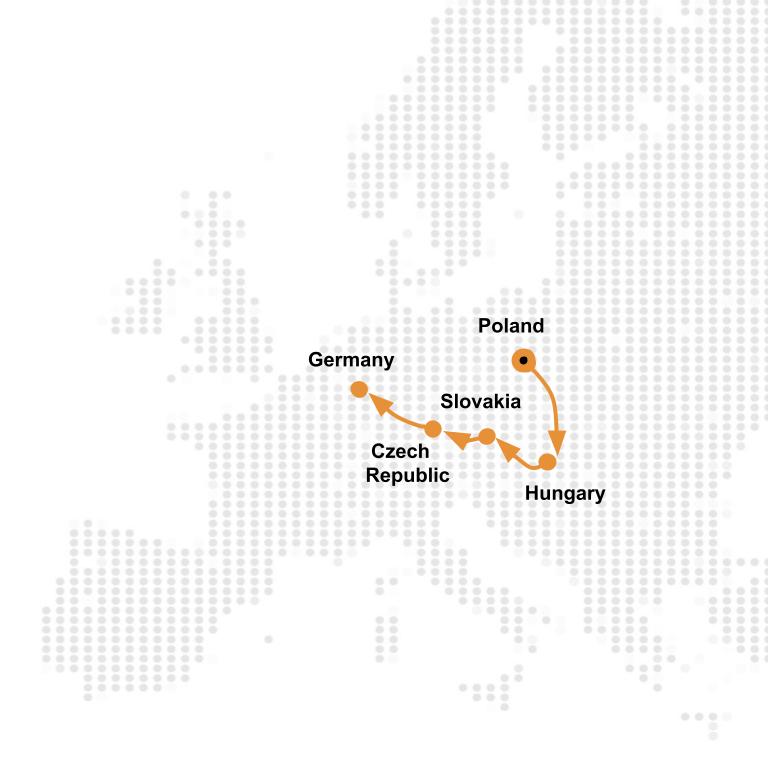
| Day 1 | > Warsaw |
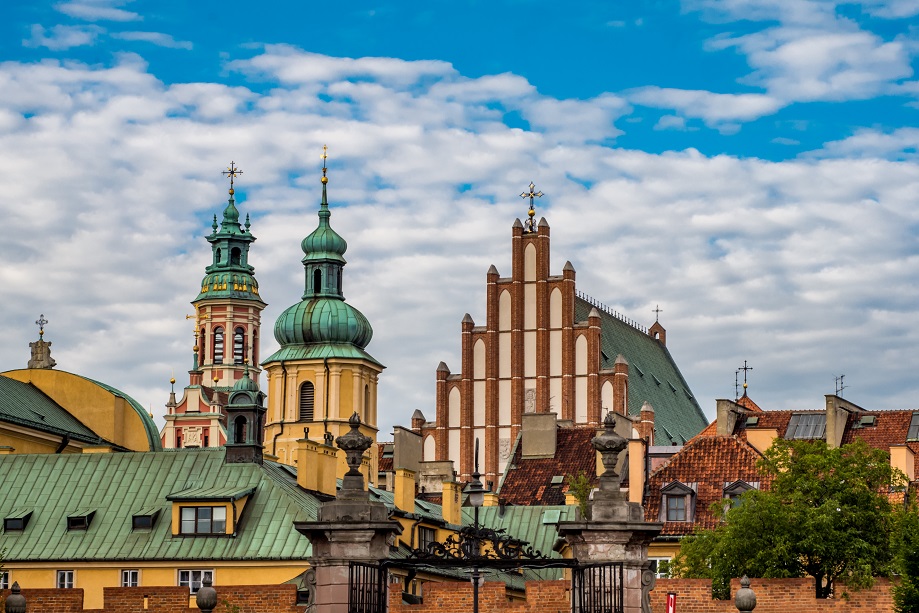
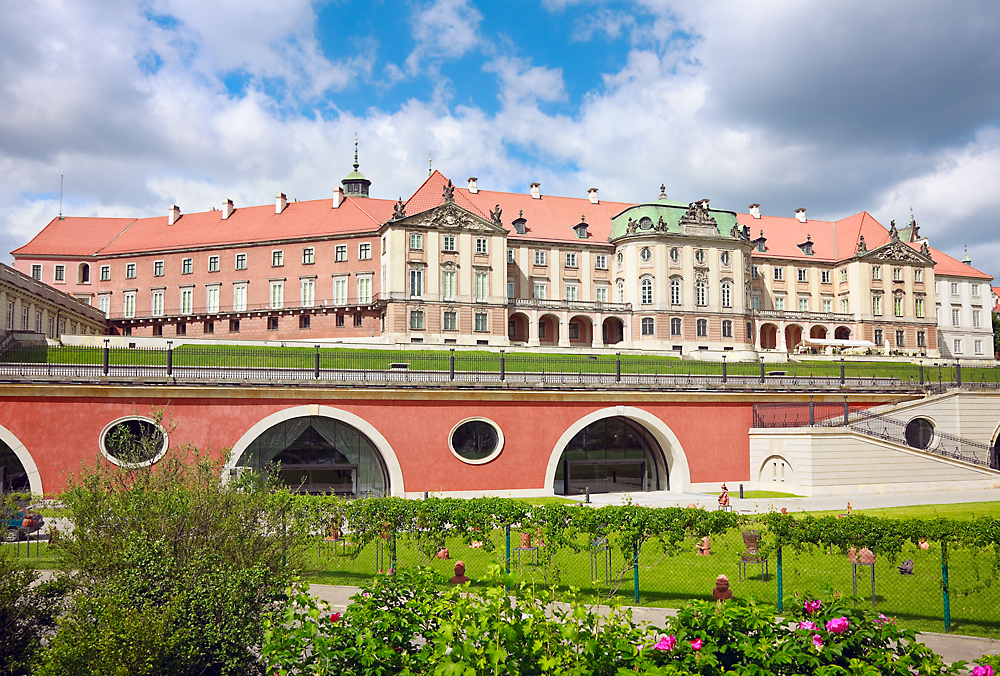


Welcome to Poland !
Arrival to Warsaw. Transfer to the hotel and check-in.
Accommodation in a centrally located hotel in Warsaw.
| Day 2 | > Warsaw |


Breakfast at your hotel.
Sightseeing of Warsaw. This tour allows us to immerse ourselves in and observe the many contrasts of the Polish capital city. The tour starts with a walk around the Lazienki Royal Park. Here we will see the famous monument dedicated to Frederic Chopin, the Palace on the Water and the Theater on the Island. We will continue with transfer to the Old Town (UNESCO) and a short walk around the Old Town: from the Royal Castle, passing next to the Saint John Cathedral, the Market Square and the barbacane to the New Town. We will continue to the Krasinski Palace, the Supreme Court bulding. Our itinerary will continue with the Grand Theatre and the National Opera, the Jablonowscy Palace, the Tomb of the Unknown Soldier and the Saxon Garden. We will also go to the former Jewish getto area and the places connected to the Holocaust during the Second World War: the Umschlagplatz and the Monument of Heroes of Ghetto.
Accommodation in a centrally located hotel in Warsaw.
| Day 3 | > Warsaw > Czestochowa > Tychy |


Breakfast at your hotel.
Transfer from Warsaw to Czestochowa.
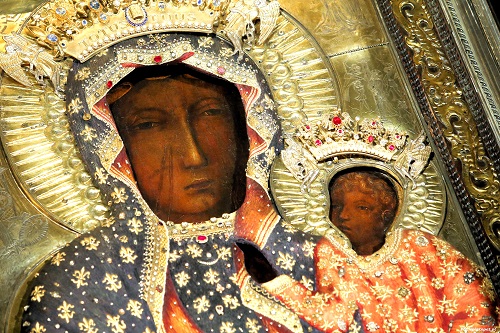
Czestochowa is known for the famous Pauline monastery of Jasna Gora that is the home of the Black Madonna painting, a shrine of the Virgin Mary. She is the Queen of Poland that the whole nation and country was entrusted to. This spiritual capital of Poland every year attracts thousands of pilgrims from all over the world. During your trip you could visit: the Basilica with Black Madonna Shrine, the exhibition devoted to the 600-years of the Monastery, the Armoury Room and the Treasury Room.
Transfer to Tychy.
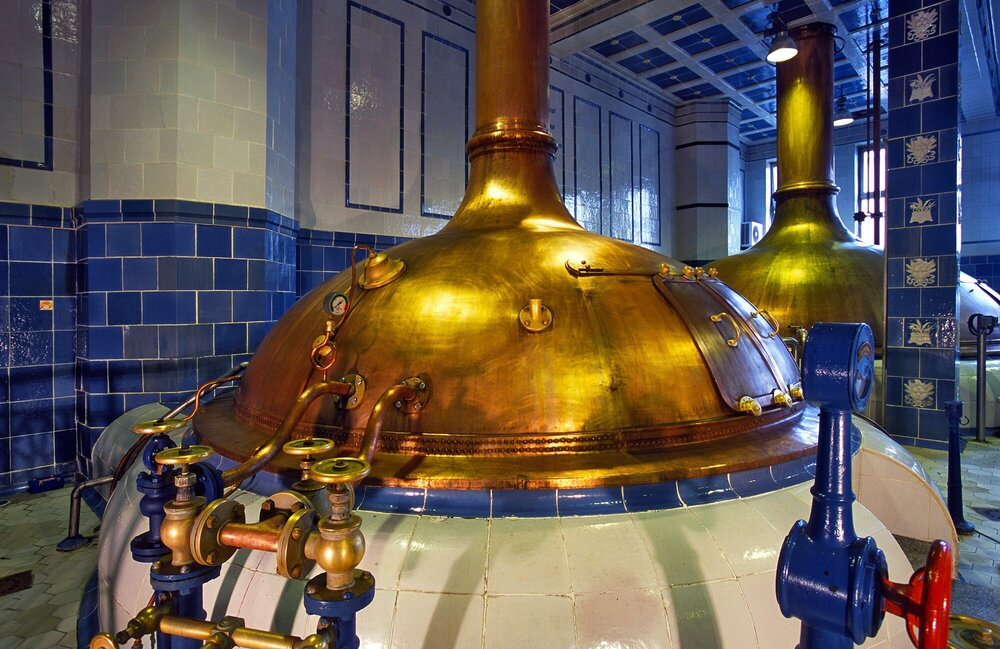
Discover the secrets of one of the largest Polish breweries and taste the most typical Polish beer brand – Tyskie, which name comes from this city!
Accommodation in a centrally located hotel in Tychy.
| Day 4 | > Tychy > Auschwitz-Birkenau > Wadowice > Kalwaria Zebrzydowska > Krakow |


Breakfast at your hotel.
Transfer from Tychy to Auschwitz.
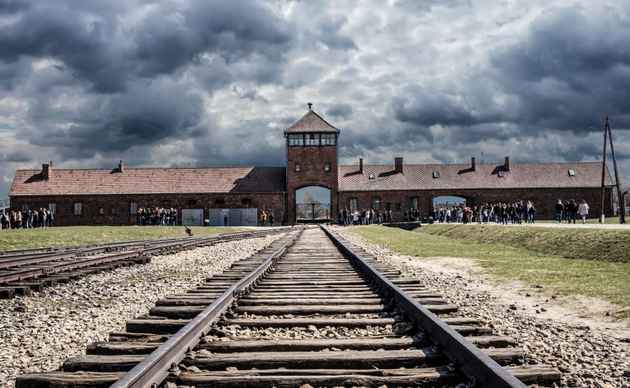
All over the world, Auschwitz has become a symbol of terror, genocide and the Holocaust. It was established by the Nazis in 1940, in the suburbs of the city of Oswiecim (Auschwitz in German) which, like other parts of Poland, was occupied by the Germans during the Second World War. A visit to concentration and extermination camp museum might help you to comprehend what incomprehensible. Transfer back to Krakow.
Transfer to Wadowice.
Visit the Basilica of the Presentation of the Blessed Virgin Mary, where Pope John Paul II was baptized.
Transfer to Kalwaria Zebrzydowska.
Visit to the monastery complex of the Franciscans-Bernardines with the early baroque church and dozens of chapels spread around in a beautiful countryside scenery (UNESCO Heritage).
Transfer to Krakow.
Accommodation in a centrally located hotel in Krakow.
| Day 5 | > Krakow |


Breakfast at your hotel.
Krakow city sightseeing: Krakow is the cultural capital of Poland with Old Town listed as UNESCO Heritage. During the tour you would see Barbican and defensive walls with Florian’s Gate, the Main Market Square with Sukiennice Cloth Hall, St Mary’s Church and Town Hall Tower. We would proceed to the Jagiellonian University, pass by Archbishop Palace (where John Paul II used to live) as well as St Andrew’s Church and St Peter and Paul’s Church to reach the Wawel Hill.
Free afternoon to your leisure.
Accommodation in a centrally located hotel in Krakow.
| Day 6 | > Krakow > Wieliczka > Krakow |


Breakfast at your hotel.
Free time in the morning.
Transfer from Krakow to Wieliczka.
Visit to Wieliczka Salt Mine – the most beautiful and the oldest operating salt mine in the world (UNESCO Heritage). From over 700 years it was a source of Polish fortune and a physical fundament of culture. Today Wieliczka is the most willingly visited Polish tourist object with magnificent chapels, charming underground lakes and original tools and equipment. During this tour you could see a number of excavated chambers on 3 levels adorned with beautiful sculptures made of salt as well as a salt museum. Transfer back to Krakow.
Accommodation in a centrally located hotel in Krakow.
| Day 7 | > Krakow > Budapest (Hungary) |


Breakfast at your hotel.
Transfer from Krakow to Budapest.
Beautiful scenery awaits us as we drive through the foothills of the Tatra Mountains. Here we cross into the Slovak Republic, full of dramatic geographical features, high alpine villages and a rich cultural heritage. After passing the Hungarian border we continue to Budapest situated on the romantic River Danube.
Accommodation in a centrally located hotel in Budapest.
| Day 8 | > Budapest |


Breakfast at your hotel.
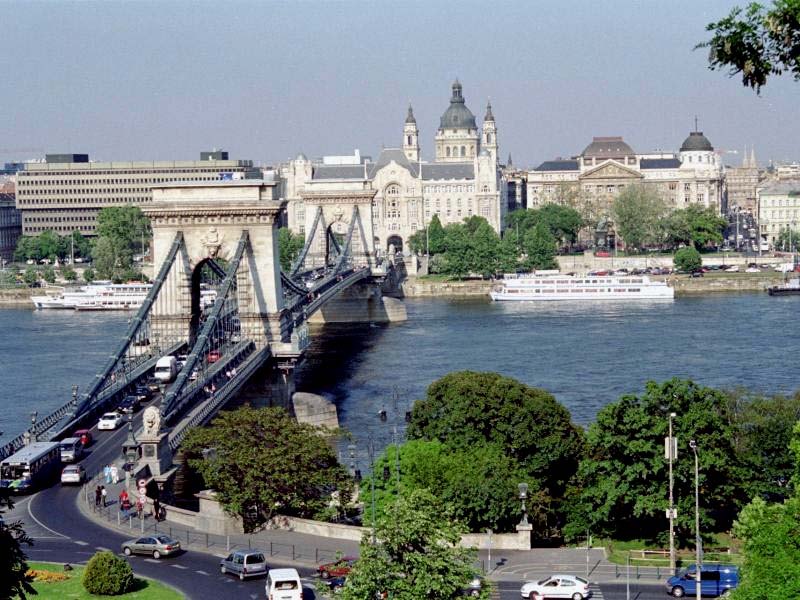
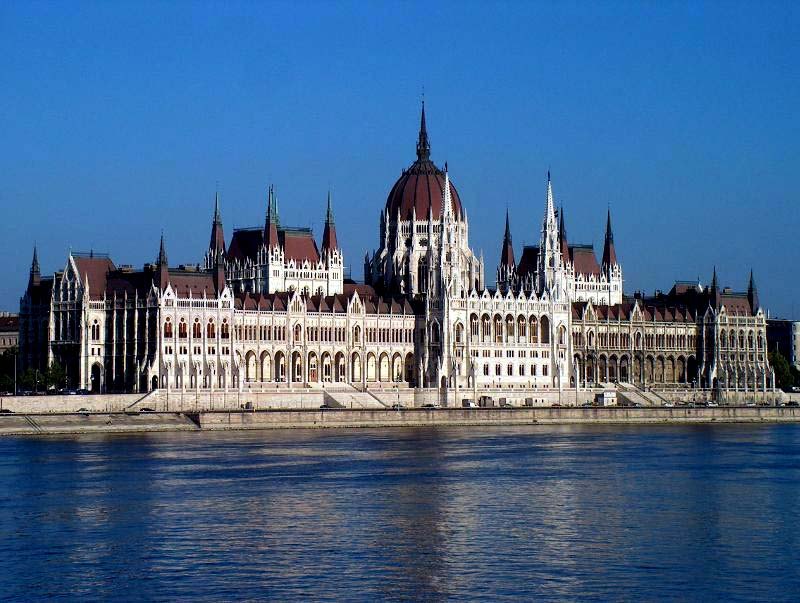
Budapest city sightseeing: drive over the Margaret Bridge to Buda; stop in the Castle District, further walk to see the main attractions of the area: Matthias Church and the Fishermen’s Bastion from where you can enjoy the beautiful panorama. Next drive to the Gellert Hill (Citadel) to admire the most spectacular view of Budapest, and then cross the Elisabeth Bridge to Pest with famous Central Market Hall, followed by the largest Synagogue of Europe and the City Park; pass by Europe’s largest thermal spa, the Budapest Zoo and the Amusement Park, the Heroes’ Square with statues of the most famous Hungarian kings and dukes, the Opera House and the St Stephen’s Basilica, visit of the impressive neo-gothic House of Parliament. During the tour you would have a chance to discover the last 1000 years of Hungarian history.
Accommodation in a centrally located hotel in Budapest.
| Day 9 | > Budapest > Bratislava (Slovakia) > Vienna (Austria) |

Breakfast at your hotel.
In the morning departure to Bratislava, journey through the region of Transdanubia, dotted with orchards and vineyards.
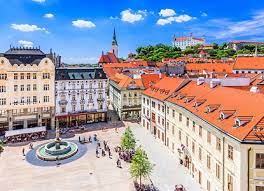
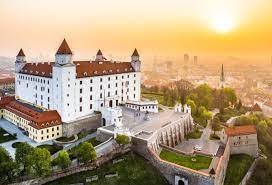
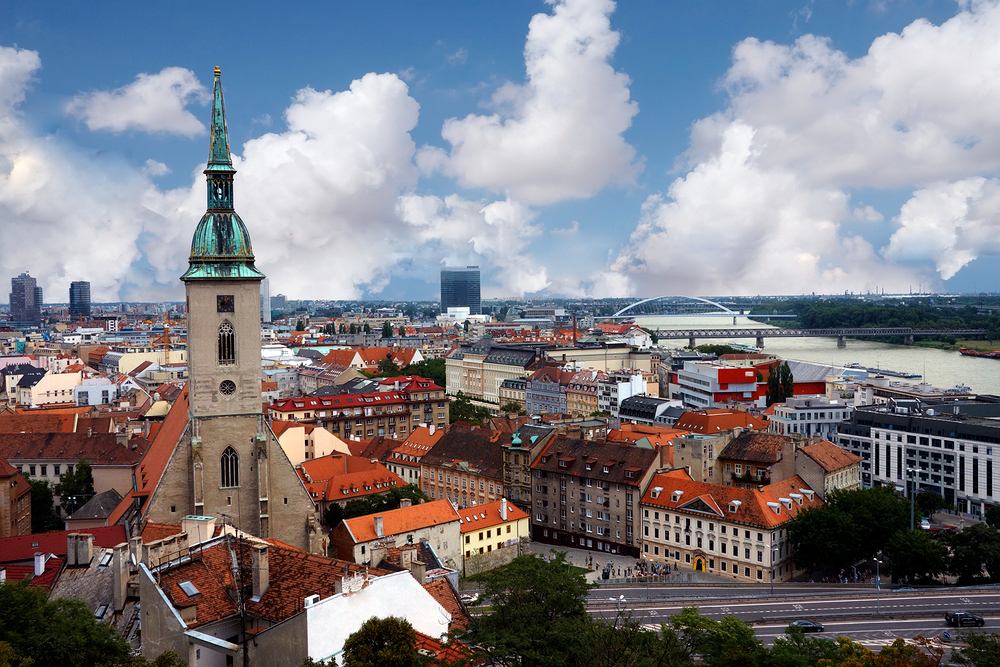
Visit of Bratislava the capital city of Slovakia. Walk through the old town to see its main monuments such as: the Cathedral of San Martin, Saint Michael Gate, the Universitas Istropolitana – the oldest university in Central Europe, Market Square, Primacial Palace, churches and palaces of the nobility, National Theater of Slovakia.
Transfer to Vienna.
Accommodation in a centrally located hotel in Vienna.
| Day 10 | > Vienna |


Breakfast at your hotel.
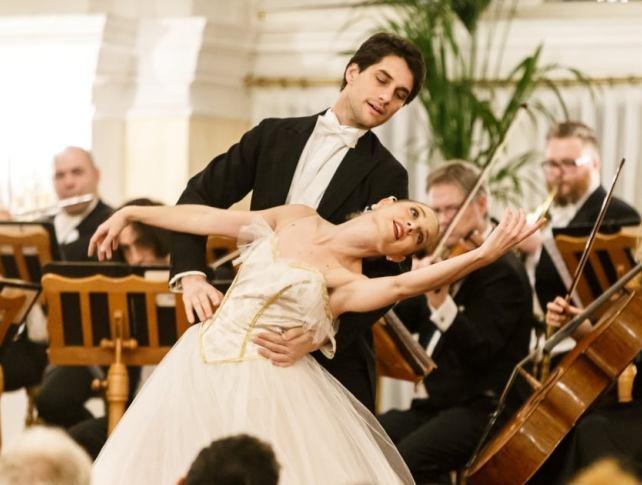
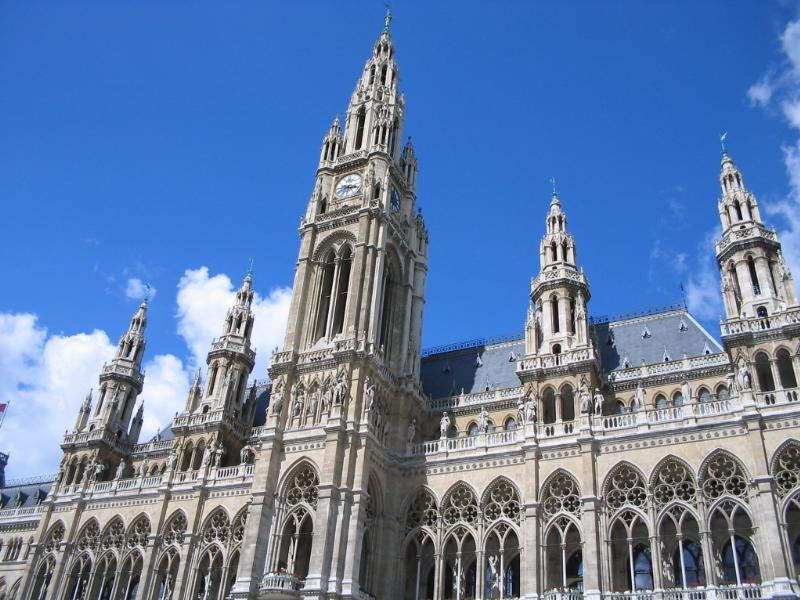
Vienna city sightseeing (UNESCO Heritage): drive along the famous Ringstrasse, Vienna’s main boulevard known for such magnificent buildings as the Museums of Fine Arts and Natural History, the State Opera House, the Parliament, the Burgtheatre, the City Hall and the Votive Church; short walk through the most beautiful parts of the city centre: Museumquarter, Hofburg – winter-residence of the Habsburgs, Kärtner Strasse – shopping street and the Stephan’s Cathedral. Time for a souvenir hunt in the elegant pedestrian area or visit Schonbrunn Palace;
Free time.
Accommodation in a centrally located hotel in Vienna.
| Day 11 | > Vienna > Prague (Czechia) |



Breakfast at your hotel.
Transfer from Vienna to Prague.
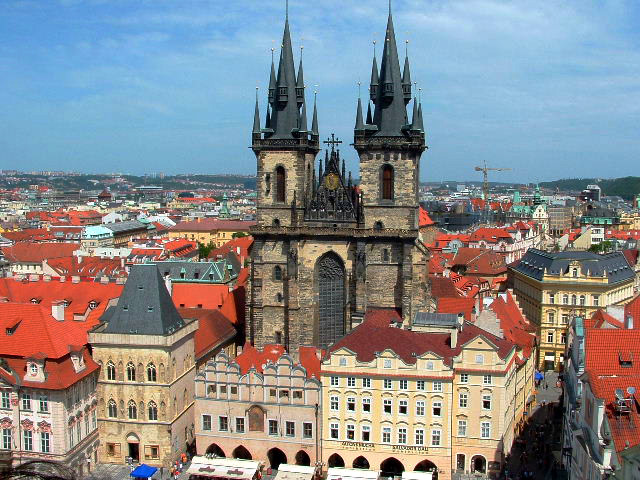
In the afternoon arrival at the golden city of Prague, described as the prettiest gem in the stone crown of the world.
Accommodation in a centrally located hotel in Prague.
| Day 12 | > Prague |


Breakfast at your hotel.
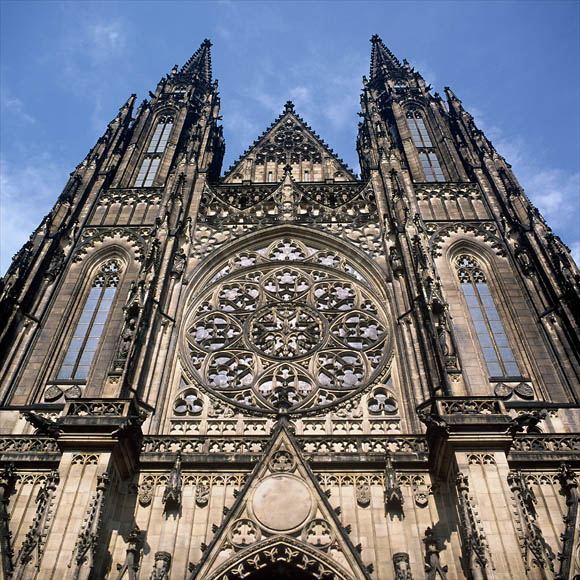
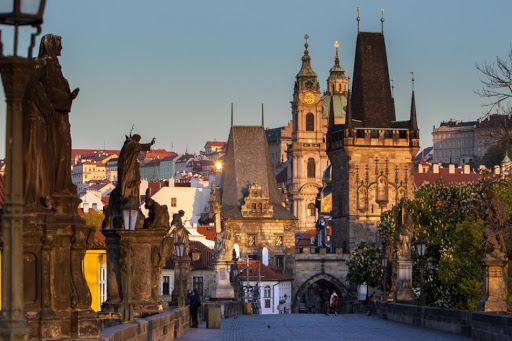
City tour of the golden city of Prague, described as the prettiest gem in the stone crown of the world. Transfer to the Prague Castle, home of Prague kings and queens for many years which houses nowadays the office of the president of the Czech Republic, several museums, the St. Vitus Cathedral, the Royal Castle and more; walk through this Hradcany district viewing the Loreto, the Archbishops Palace, Golden Lane and other interesting areas along the way to the castle; visit part of the St. Vitus Cathedral; walk down through the Little Quarter and over the Charles Bridge via the coronation route to the Old Town Square with the famous Astronomical Clock, Old Town Square Tower, end on Wenceslas Square, the new part of town. In teh afternoon we will be strolling through the Jewish Quarter, Josefov, which can be proud of its 6 synagogues and the cemetery. You will be passing by the Charles Bridge, the oldest bridge in Prague built by one of the most famous Czech emperors, Charles IV, in 14th century.
Accommodation in a centrally located hotel in Prague.
| Day 13 | > Prague > Dresden (Germany) |
Breakfast at your hotel.
Transfer from Prague to Dresden.
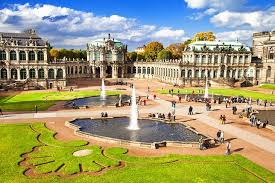
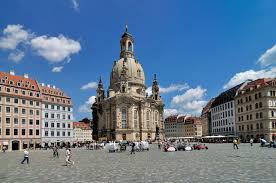
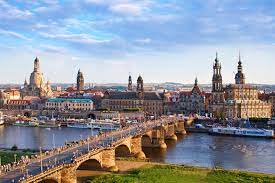
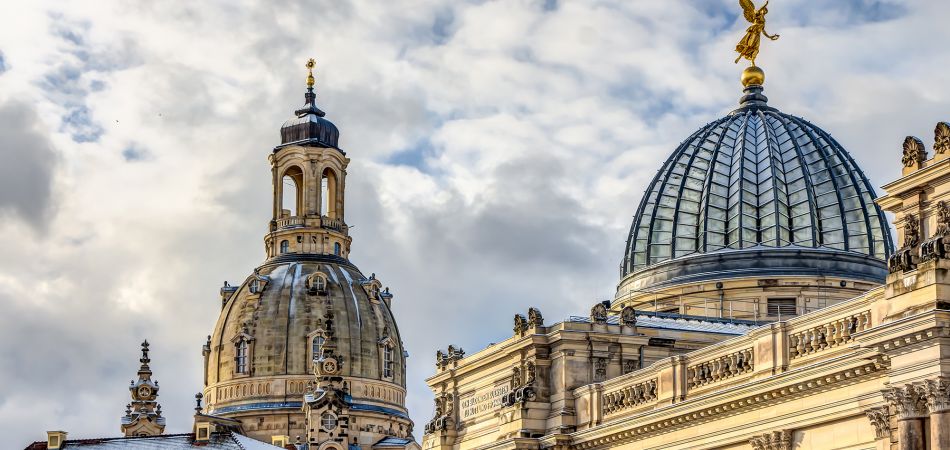
Panoramic tour of the city of Dresden: 800 years of history left several works of architecture that make the city a collection of art. We can admire the landscape of the valley and the Elbe river, the bridges, the Church of Our Lady, the Semper opera and the Zwinger Palace. The Saxon area is famous for its food, beer and wines – we can taste them in Dresden, the capital of the region.
Accommodation in a centrally located hotel in Dresden.
| Day 14 | > Dresden > Meissen > Potsdam > Berlin |


Breakfast at your hotel.
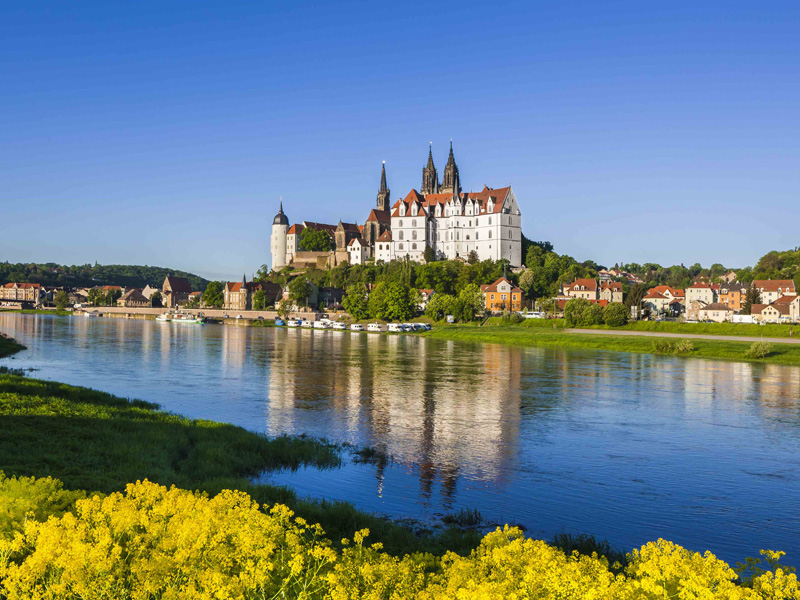
Transfer from Dresden to Meissen.
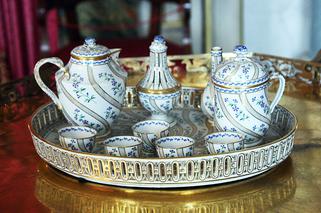
Visit one of Germany’s oldest porcelain manufactories in Meissen. Founded in the 18th century and being continuously in operation since then, the delicate, always handcrafted products are found in royal courts and celebrities homes all around the world. See the exhibition hall and the demonstration workshops were all steps of the painting and glazing process is explained to you.
Transfer to Potsdam.
Sightseeing of Potsdam. Visit to the Frederick the Great’s Royal Gardens of Sanssouci and Cecilienhof Palace (UNESCO), the location of the Potsdam Conference that ended WW II and marked the begin of the Cold War.
Transfer to Berlin.
Accommodation in a centrally located hotel in Berlin.
| Day 15 | > Berlin |


Breakfast at your hotel.
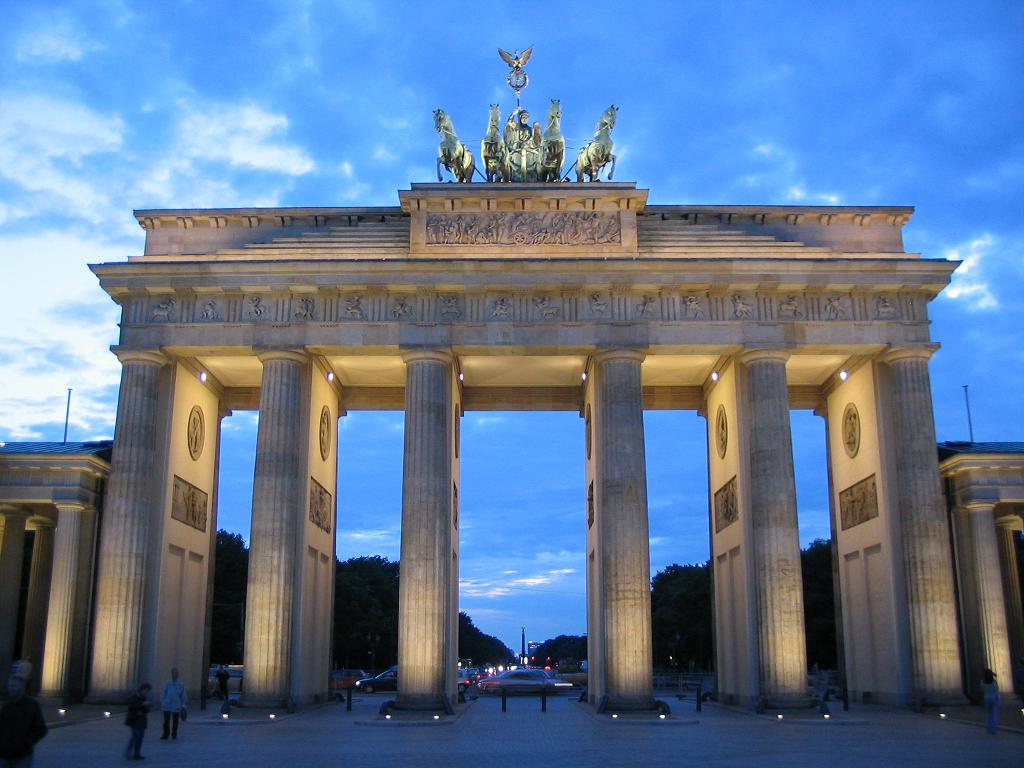
Visit of the city of Berlin, the capital of Germany. Panoramic city tour from east to west: Brandenburg Gate, Reichstag German Parliament Building, New Government Buildings, Museum Island (UNESCO), Berlin Protestant Cathedral and Palace Bridge, Alexander Square (Alexanderplatz) , Red City Hall. Afterwards, with the “red” excursion we visit Berlin from the times of the cold war and we explore the sectors of the Soviet zone: the Berlin Wall and Checkpoint Charlie.
Accommodation in a centrally located hotel in Berlin.
| Day 16 | > Berlin > Warsaw |


Breakfast at your hotel.
Transfer from Berlin to the airport in Warsaw. This trip could be also finished in Berlin.
END of SERVICES.
Contact us
If you want us to prepare a special trip for you, please write us specifying all your requirements. We will be happy to answer.
Treasures of Central Europe – a 16-day journey through six countries, connecting history, culture, and iconic European cities into one seamless experience
If you want to experience Central Europe in a way that goes beyond individual destinations and instead reveals how the region connects as a whole, this multi-country journey offers a complete and structured perspective. Over the course of sixteen days, the itinerary links Poland, Hungary, Slovakia, Austria, the Czech Republic, and Germany into one coherent route, allowing you to move through different cultures, architectural styles, and historical narratives without losing continuity.
This is not a fast-paced checklist of cities. It is a carefully designed journey where each destination builds on the previous one, creating a sense of progression that allows you to understand not only where you are, but how each place relates to the broader European context.
A route designed to show the evolution of Central Europe
The structure of this itinerary is based on movement across regions that have been historically connected for centuries. Starting in Warsaw and ending in Berlin, the journey follows a path that reflects both geography and history, creating a natural flow between destinations.
You begin in Poland’s capital, where modern development and historical reconstruction coexist, before moving to Krakow, a city that preserves a more traditional cultural identity. From there, the journey expands south into Hungary, introducing a different atmosphere shaped by the Danube and a distinct architectural style.
The route continues through Slovakia into Austria, where Vienna represents a shift toward imperial heritage and refined urban planning. Prague then introduces a different type of continuity, with its preserved medieval structure, while Dresden and Berlin add a final layer of historical depth shaped by more recent events.
This progression creates a narrative that unfolds gradually rather than presenting destinations in isolation.
From national identity to shared European heritage
One of the most valuable aspects of this journey is the ability to observe how different countries express their identity while still sharing a common historical background. Central Europe has been shaped by empires, trade routes, and cultural exchange, and these influences remain visible in architecture, cuisine, and urban design.
As you move from one country to another, you begin to recognize patterns and contrasts. The transition between regions is not abrupt, but layered. Similar elements appear in different forms, creating a sense of continuity that becomes more noticeable with each stage of the journey.
This transforms travel into a process of understanding rather than simple observation.
A balance between iconic landmarks and deeper cultural context
The itinerary includes many of the most recognizable locations in Central Europe, but it does not rely only on their visual appeal. Each destination is presented with context, allowing you to understand its significance within a broader historical and cultural framework.
In Warsaw, the contrast between past and present becomes immediately visible. In Krakow, the preserved old town and royal heritage create a different perspective on Polish history. The visit to Auschwitz introduces a more serious and reflective dimension, adding depth to the overall experience
Budapest shifts the atmosphere toward a more dynamic and layered identity, while Vienna introduces the legacy of imperial Europe. Prague offers one of the most visually cohesive urban environments, and the later stages in Germany bring a more modern historical narrative into the journey.
Each destination contributes a different layer, creating a multi-dimensional experience.
A journey that connects cities through real transitions
One of the key strengths of this itinerary is how it handles movement between locations. Instead of treating transfers as necessary interruptions, they become part of the experience itself.
Traveling from Krakow to Budapest, for example, includes a transition through mountainous landscapes and changing terrain, reinforcing the sense of movement between regions
Similarly, moving from Vienna to Prague or from Prague to Dresden introduces new architectural styles and cultural atmospheres that feel connected rather than separate. This continuity ensures that the journey remains engaging even between major destinations.
Cultural diversity experienced within a single journey
Each country included in the itinerary introduces a distinct cultural identity, which becomes more noticeable when experienced in sequence. Poland offers a strong narrative shaped by resilience and transformation, Hungary brings a unique blend of influences centered around the Danube, Austria reflects imperial elegance, and the Czech Republic presents a preserved historical landscape.
Germany adds another dimension, where architecture and urban planning reflect more recent historical developments. Experiencing all of these within one journey creates a broader understanding of Europe that goes beyond individual countries.
A structured pace that balances depth and variety
Despite the number of destinations, the itinerary is designed to maintain a balanced rhythm. Each city is given enough time to be experienced properly, while the overall structure ensures that the journey continues to evolve.
This balance is essential in preventing the experience from becoming overwhelming. Instead of rushing through locations, the program allows for both guided exploration and moments of individual discovery.
The result is a journey that feels both comprehensive and manageable.
Who is this journey designed for?
This program is particularly well suited for travelers who want to maximize their experience within a limited timeframe. It appeals to those who are interested in history, culture, and architecture, and who want to understand how different parts of Europe connect.
It is also an ideal choice for first-time visitors to the region, as it provides a broad and structured introduction to multiple countries without the complexity of organizing such a trip independently.
At the same time, it offers enough depth to remain engaging for more experienced travelers.
How seasonality shapes the experience
The character of this journey changes depending on the season, but it remains attractive throughout the year. Spring introduces a lighter atmosphere and more comfortable conditions for city exploration. Summer offers long days and a more vibrant urban environment, while autumn enhances the visual experience with warmer tones and a slightly calmer pace.
Each season adds a different dimension to the cities and landscapes included in the itinerary.
Why this journey creates a more complete understanding of Europe
What makes this program stand out is the way it combines multiple countries into one coherent experience. Instead of focusing on individual highlights, it creates a broader narrative that connects different cultures, histories, and landscapes.
By moving through six countries within a single, well-structured route, you gain a perspective that is difficult to achieve through separate trips. You begin to understand not only the differences between places, but also the connections that define the region.
This creates a deeper and more lasting impression.
How to decide if this multi-country journey is right for you
If you are looking for a travel experience that offers diversity, structure, and a broader perspective within one itinerary, this program provides a strong and well-balanced solution. It is particularly suitable for those who want to explore more than one country without sacrificing quality or coherence.
For travelers who value both variety and depth, this is one of the most complete ways to experience Central Europe.
FAQ
How many countries are included in this tour?
The itinerary covers six countries across Central Europe within a single journey
How long is the program?
The full itinerary lasts 16 days and 15 nights
Does the tour include both Western and Eastern Europe elements?
Yes, it combines different cultural and historical influences within one route.
Is this suitable for first-time visitors to Europe?
Yes, it offers a broad and structured introduction to multiple countries.
What makes this itinerary different from standard tours?
Its strength lies in connecting multiple destinations into one continuous and meaningful journey rather than treating them separately.