


E-Bike adventure along the VELO Dunajec Trail
8 days / 7 nights
Embark on an unforgettable E-Bike adventure along the Velo Dunajec Trail, one of Poland’s most scenic cycling routes. Glide effortlessly through breathtaking landscapes, from the majestic Tatra Mountains to the serene Dunajec River Valley. Discover charming villages, historic landmarks, and stunning viewpoints along the way.

| Day 1 | > Krakow > Zakopane |
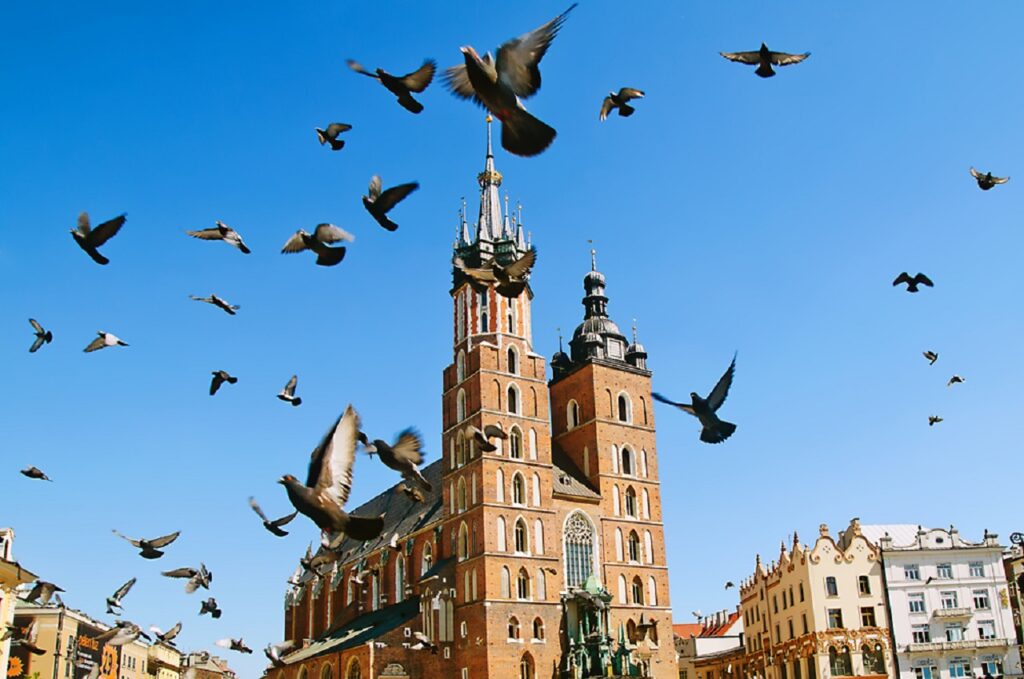
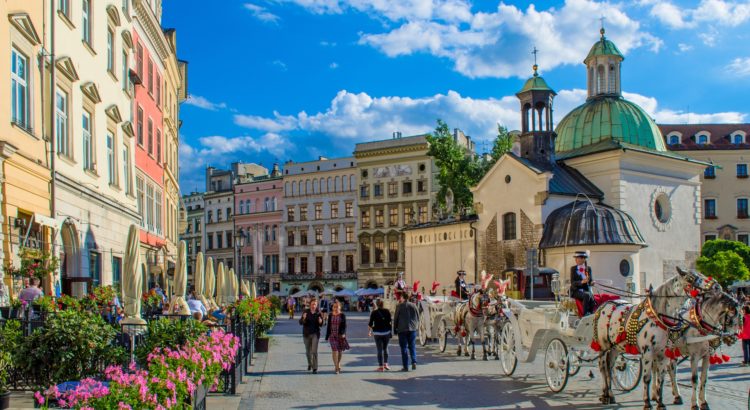

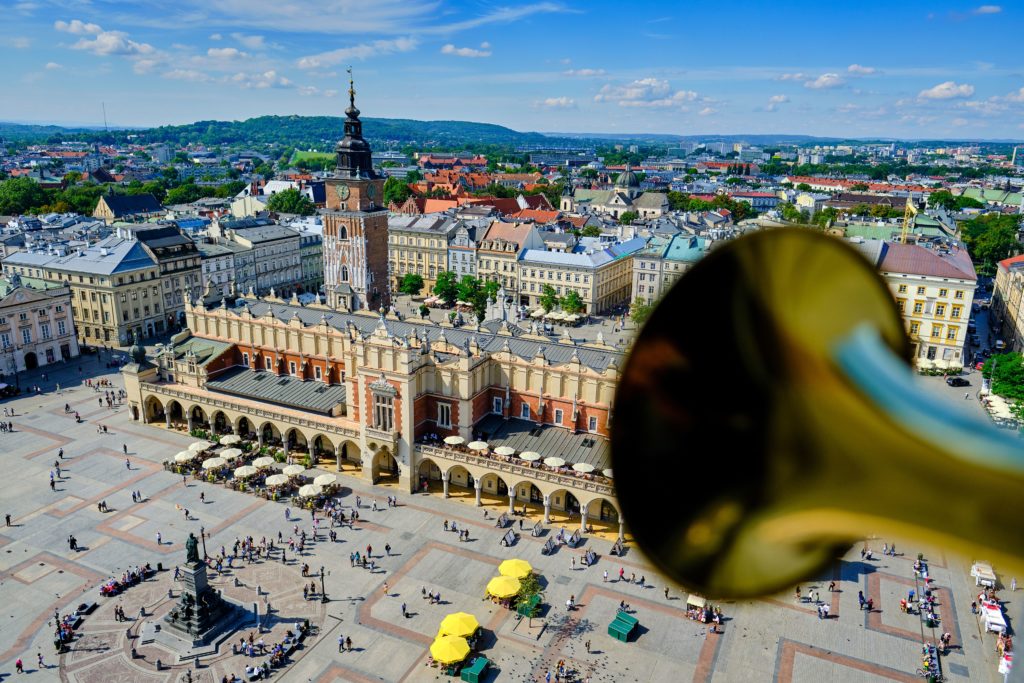
Welcome to Poland !
Arrival to Krakow, Balice Airport.
You will be welcomed at the hotel in Krakow and then there will be a transfer to the hotel in Zakopane.
Selecion of e-bikes and training in their use and safety on the route.
Welcome drink and group meeting with your guide in Zakopane.
Accommodation in a nice pension.
| Day 2 | > Zakopane > Nowy Targ (50 km cycling) |
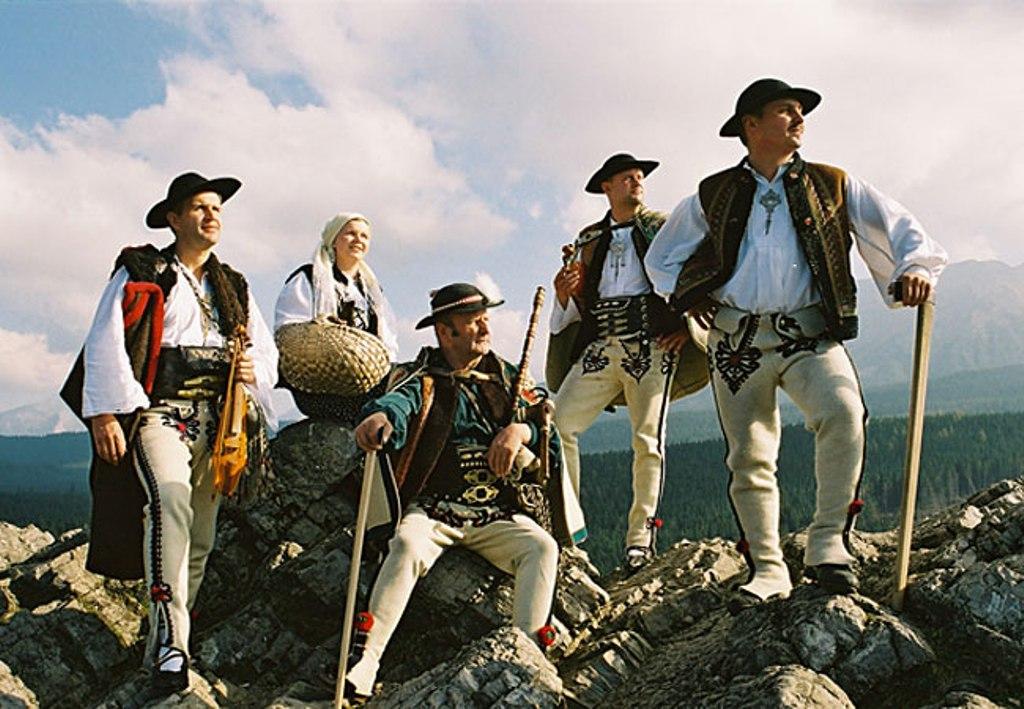
Breakfast at your pension.
Route: Zakopane – Gubalowka Hill – Chocholow – Nowy Targ (distance: 50 km)
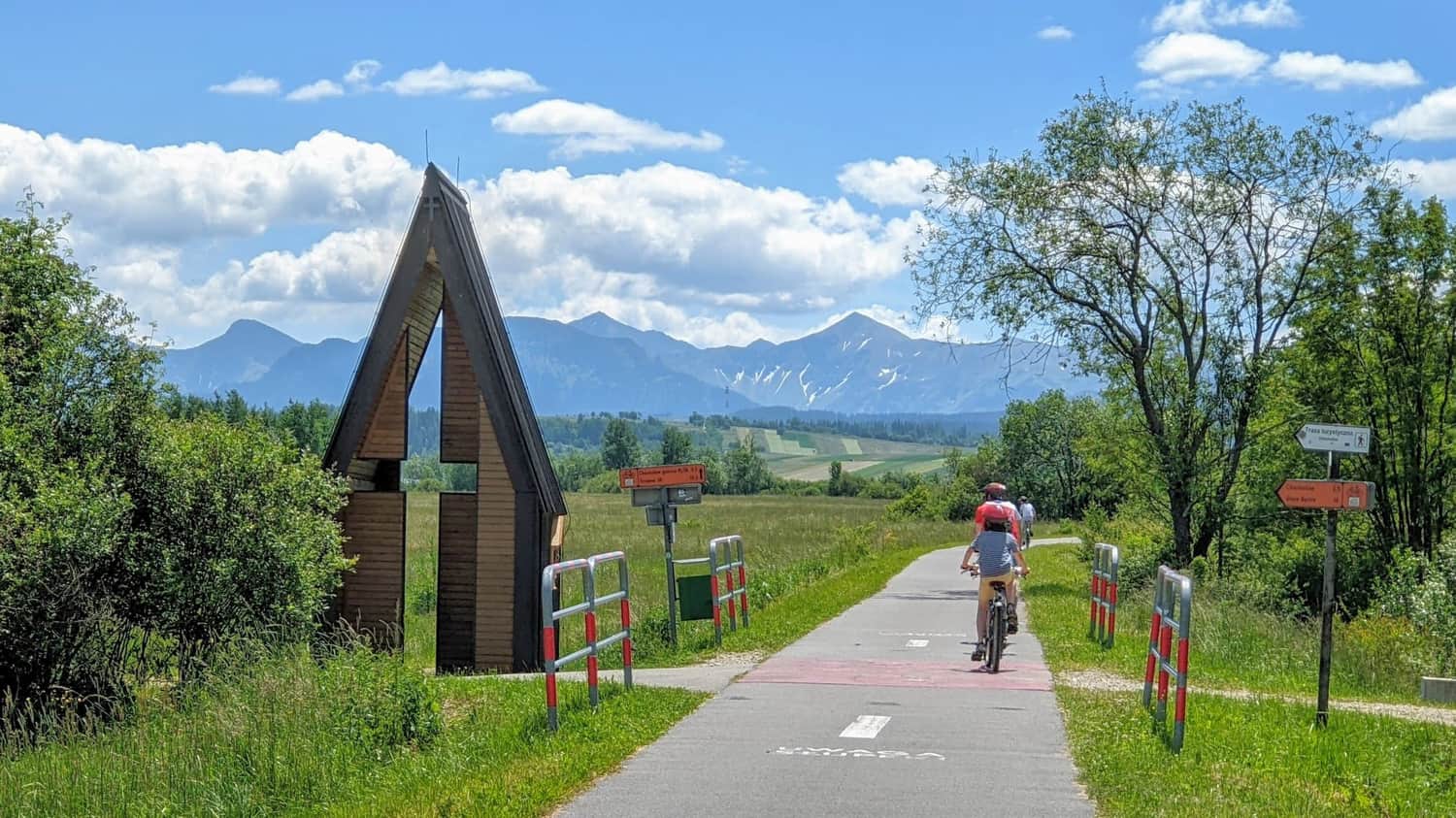
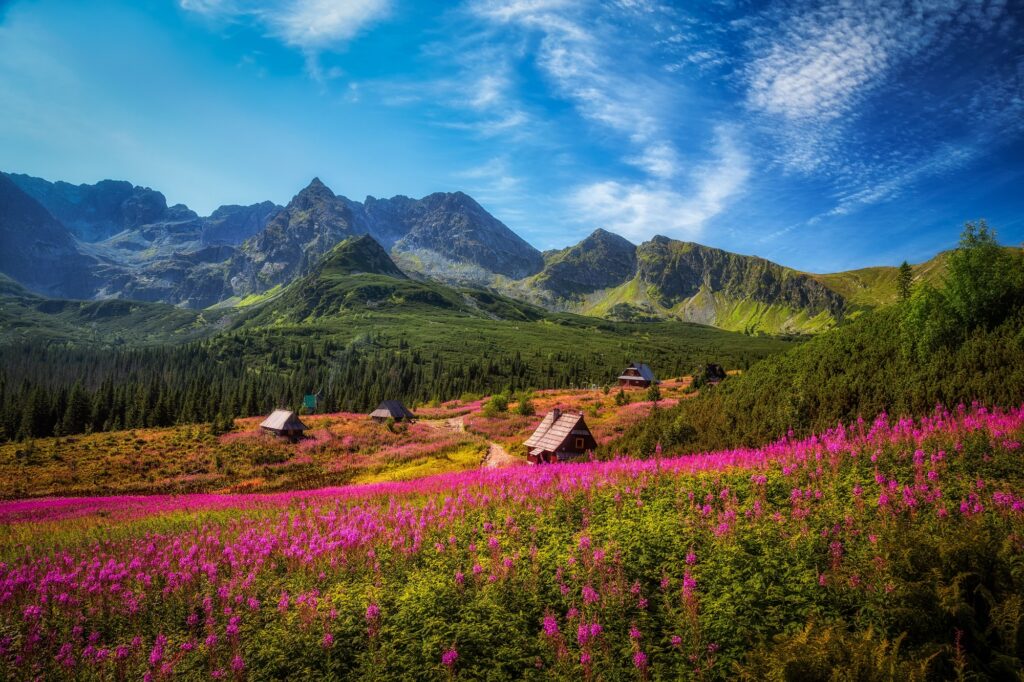
The cycling route is a scenic and enjoyable journey through the heart of the Polish Highlands. This route offers a mix of challenging climbs, stunning views of the Tatra Mountains, and the opportunity to explore traditional villages. Here’s a detailed description of this bike route:
The journey begins in Zakopane, the most popular town in the Tatra region. From Zakopane, you’ll start your cycling adventure by heading towards Gubalowka. The town has well-marked cycling paths, and you’ll pass through streets lined with traditional wooden architecture as you begin to ascend the hills towards Gubalowka. Zakopane is a bustling town, so be prepared for traffic in the center, but as you head out of town, the route becomes more relaxed and picturesque.
Cycling up to Gubalowka offers an exciting challenge, as you’ll gain altitude and enjoy magnificent views of Zakopane and the surrounding mountains. The ride to the top can be quite steep, but once you reach the summit, you’ll be rewarded with panoramic views of the Tatra Mountains and the Zakopane valley. From Gubalowka, you can continue your journey to the next destination.
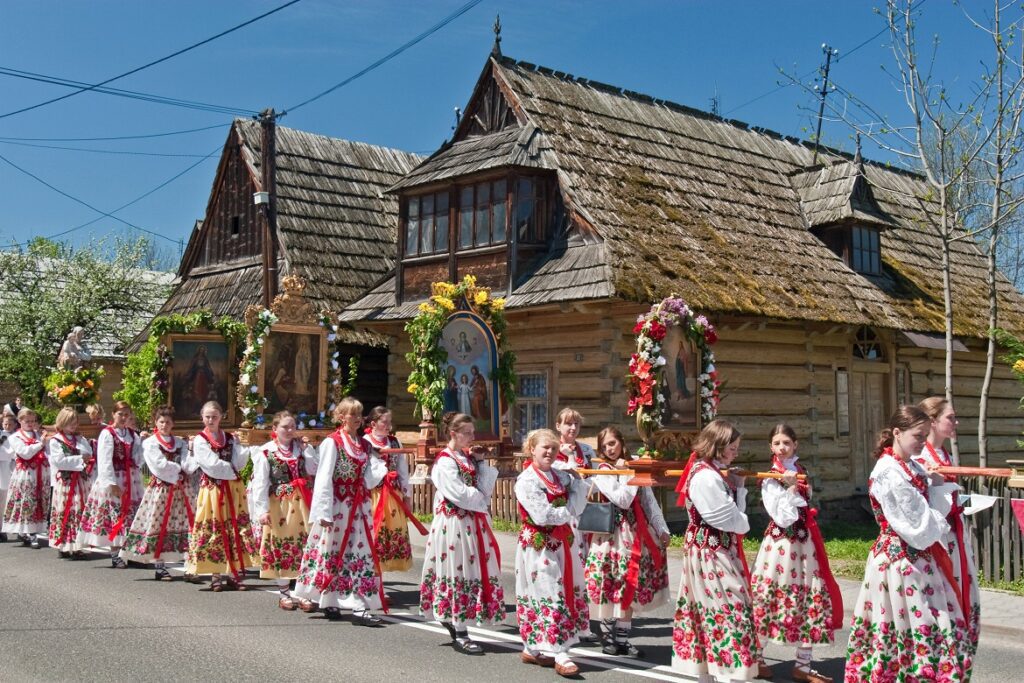
After descending from Gubalowka, head towards Chocholow, a picturesque highland village known for its traditional wooden houses. The route to Chocholow is relatively flat and easy, and you’ll pass through beautiful farmland and rolling hills, with the Tatra Mountains in the distance. Chocholow is a lovely spot to take a break, admire the well-preserved architecture, and experience the authentic atmosphere of a Podhale village.
From Chocholow, continue cycling towards Nowy Targ, the largest town in the Podhale region. This stretch of the route is mostly flat and follows rural roads with scenic views of the surrounding countryside. Once you arrive in Nowy Targ, you can explore the vibrant town, known for its market square, regional products, and the gateway it provides to further exploration of the Tatra Mountains.
Accommodation in a nice pension.
| Day 3 | > Nowy Targ > Szczawnica (65 km cycling) |
Breakfast at your pension.
Route: Nowy Targ – Czorsztyn – Red Monastery – Szczawnica (distance: 65 km)
The cycling route takes you through some of the most beautiful and diverse landscapes of southern Poland and Slovakia, offering a mix of rolling hills, lakes, cultural landmarks, and scenic views.
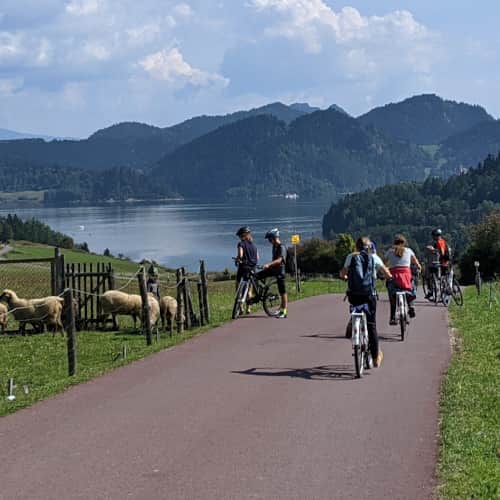
Your journey begins in Nowy Targ, the largest town in the Podhale region. From here, you’ll cycle towards Czorsztyn, which is about 20 kilometers away. The roads are mostly flat, with some gentle climbs as you leave Nowy Targ behind and head into the countryside. Along the way, you’ll pass traditional wooden houses and lush farmland, with stunning views of the Tatra Mountains in the background.
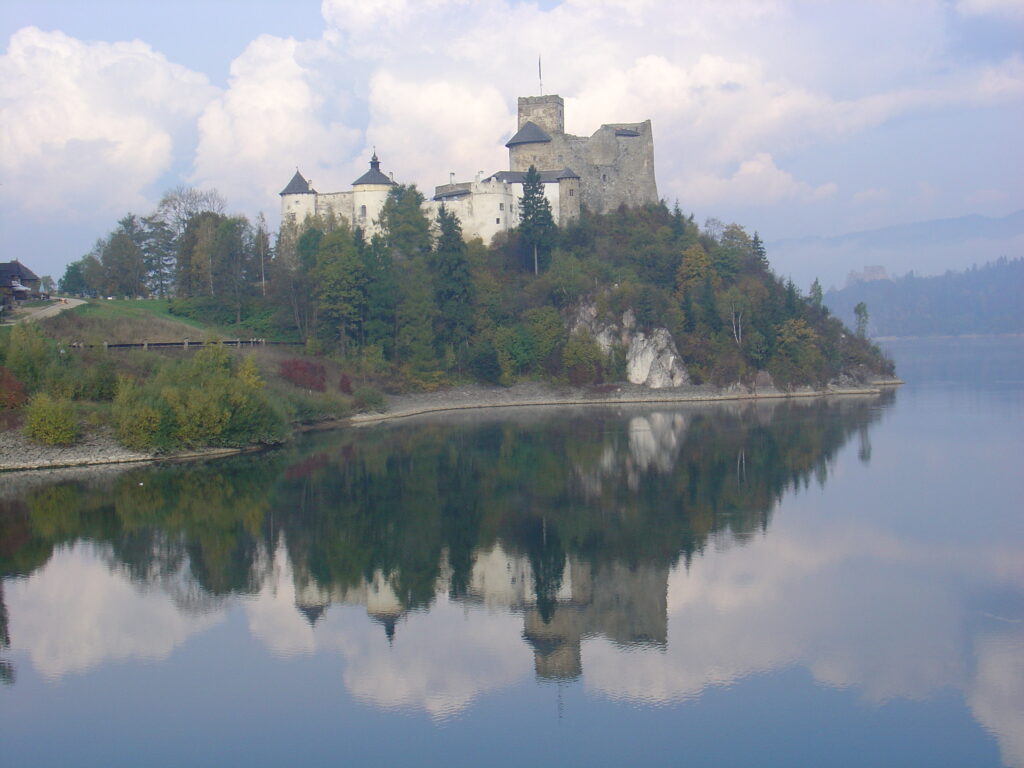
Once you reach Czorsztyn, you can take a break to enjoy the beautiful scenery. This small village is situated by Lake Czorsztyn, and the highlight here is the Czorsztyn Castle, a medieval fortress that overlooks the lake. The area offers many cycling paths around the lake and through the surrounding hills. You can take in the views of the castle and the nearby Niedzica Castle across the water. The terrain around Czorsztyn is mostly rolling, with some short climbs, making it a great spot to stretch your legs and enjoy the landscape before continuing your ride.
Stop at Niedzica Castle – the most important fortified stronghold of the Pieniny Mountains, a former border post of the Polish Crown which offers one of the most iconic castle outlines in Poland, as seen from the opposite Czorsztyn Castle.
After visiting Czorsztyn, you’ll continue towards the Red Monastery (Czerwony Klasztor), located just across the border in Slovakia. The ride to the monastery is a scenic journey along the banks of the Dunajec River, where you’ll encounter beautiful views of the river gorge and the surrounding mountains. The route can be a bit more challenging, with some moderate climbs, but the stunning landscape makes it worth the effort.
The Red Monastery, founded in the 14th century, is known for its beautiful red brick architecture and its peaceful surroundings.
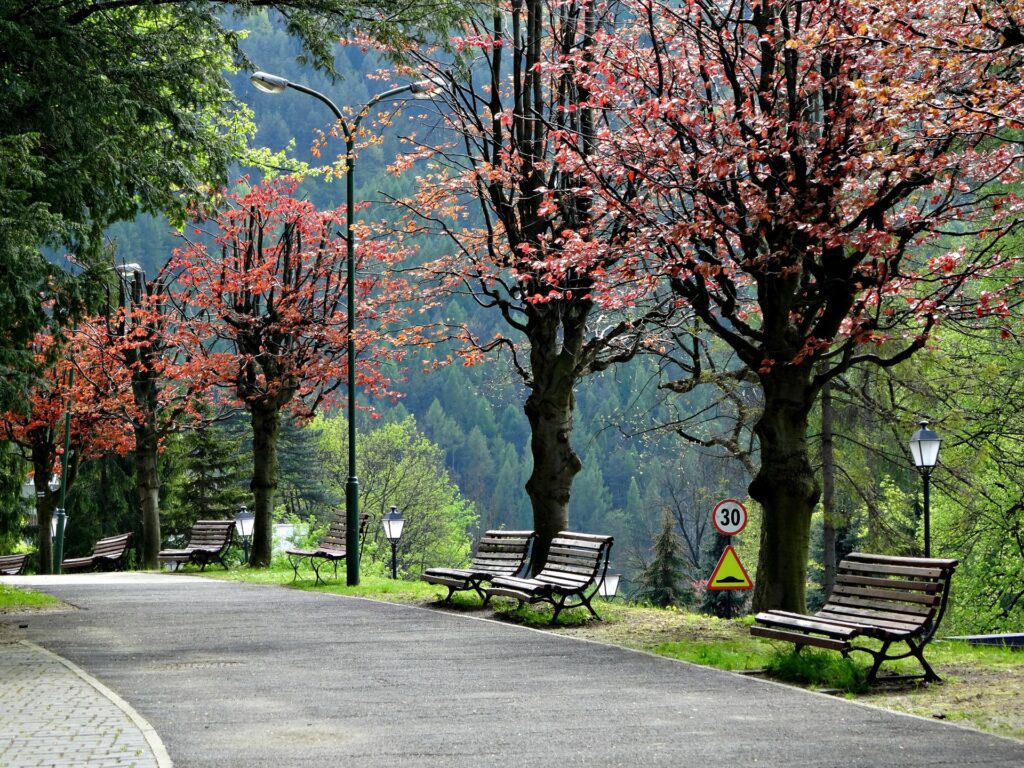
From the Red Monastery, continue cycling towards Szczawnica, a charming health-resort town located in the Pieniny Mountains. The final stretch of the ride offers some moderate uphill climbs, but the reward is the peaceful and picturesque town of Szczawnica, known for its mineral springs and beautiful surroundings. Once in Szczawnica, you can relax and explore the town’s park, take a dip in the local thermal baths.
Accommodation in a nice pension.
| Day 4 | > Szczawnica > Nowy Sącz (65 km cycling) |
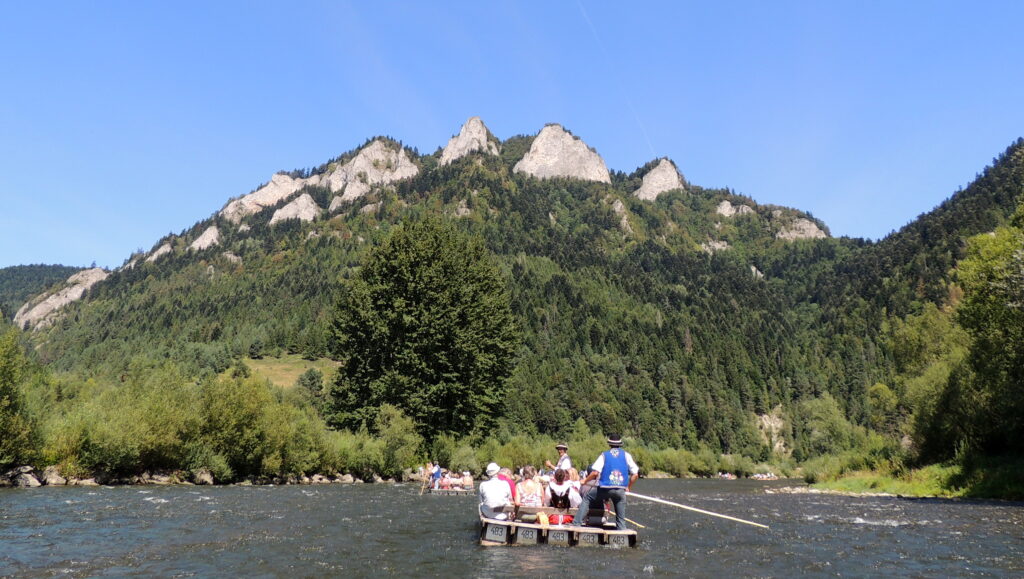

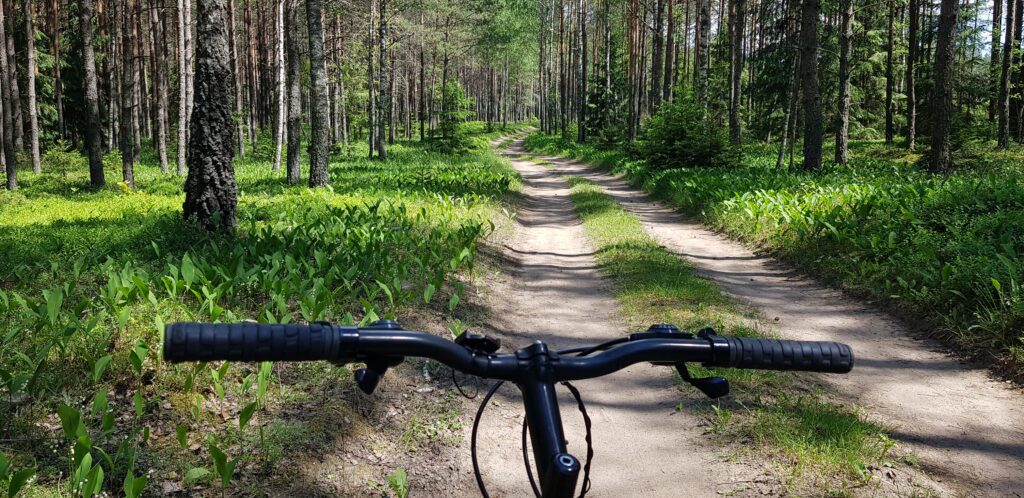
Route: Szczawnica – Stary Sacz – Nowy Sacz (distance: 65 km)
The cycling route takes you through some of the most scenic and culturally rich areas of the Sądecczyzna region in southern Poland. This route offers a combination of peaceful countryside, historical towns, and beautiful natural landscapes. Here’s a detailed description of the route:
Your journey begins in Szczawnica, a charming health-resort town nestled in the Pieniny Mountains. Known for its mineral springs, spas, and stunning surroundings, Szczawnica is a perfect starting point for a cycling adventure. From here, you’ll cycle through the picturesque valleys and rolling hills of the region, heading towards Stary Sącz. The first part of the ride is relatively flat, with some gentle uphill sections as you leave the town and head into the countryside.
After cycling for around 20 kilometers, you’ll reach Stary Sacz, a historic town located on the banks of the Dunajec River. Stary Sącz is known for its well-preserved medieval charm and historical sites. One of the main attractions here is the Sisters of St. Clare Monastery, which dates back to the 13th century, as well as the Stary Sącz Market Square, where you can admire the town’s architecture. Stary Sącz is also home to the Ethnographic Park, which showcases traditional wooden houses and local folk culture. The terrain around Stary Sącz is slightly hilly, but the route is generally easy, making it a pleasant stop to rest and explore.
From Stary Sącz, continue cycling towards Nowy Sącz, the largest city in the region, located around 10 kilometers further along the route. The road to Nowy Sącz is mostly flat and passes through rural areas, with beautiful views of the surrounding hills and fields. Nowy Sącz is a lively town with a rich history, and it is the administrative and cultural center of the region. Upon arrival, you can explore the Nowy Sącz Market Square, which is surrounded by historic buildings, or visit the Nowy Sącz Castle. The town also has several museums, including the Ethnographic Museum and the Muzeum Jana Pawła II, dedicated to the life of Pope John Paul II, who had strong ties to the region.
Accommodation in a nice pension.
| Day 5 | > Nowy Sącz > Piwniczna Zdrój (40 km cycling) |
Breakfast at your pension.
Route: Nowy Sacz – Sadecki Ethnographic Park – Piwniczna Zdroj (distance: 40 km)
The cycling route takes you through the heart of the Sądecczyzna region, offering a wonderful blend of culture, history, and natural beauty. This route is perfect for cyclists who enjoy leisurely rides through picturesque landscapes, while also exploring regional heritage sites. Here’s a detailed description of the route:
Your journey begins in Nowy Sącz, the largest city in the region and a hub of culture and history.
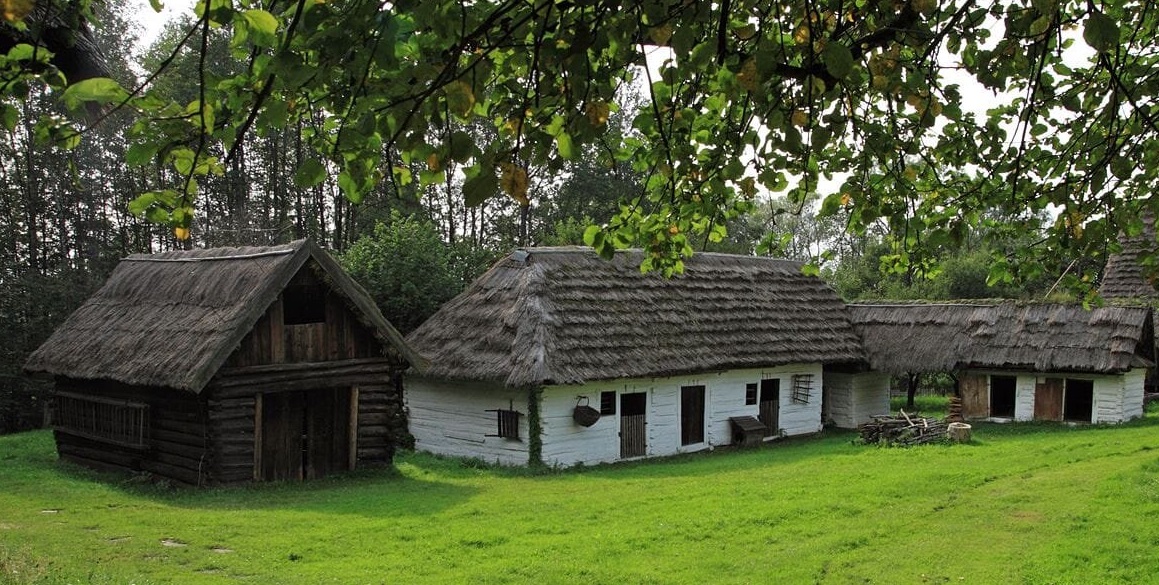
The Sądecki Ethnographic Park (also known as the Open-Air Museum of Folk Architecture) is an excellent place to stop and explore. This ethnographic museum is dedicated to preserving the traditional architecture and way of life of the people of the Sądecczyzna region. The park features a collection of historic wooden buildings, such as farmhouses, barns, and chapels, brought from local villages.
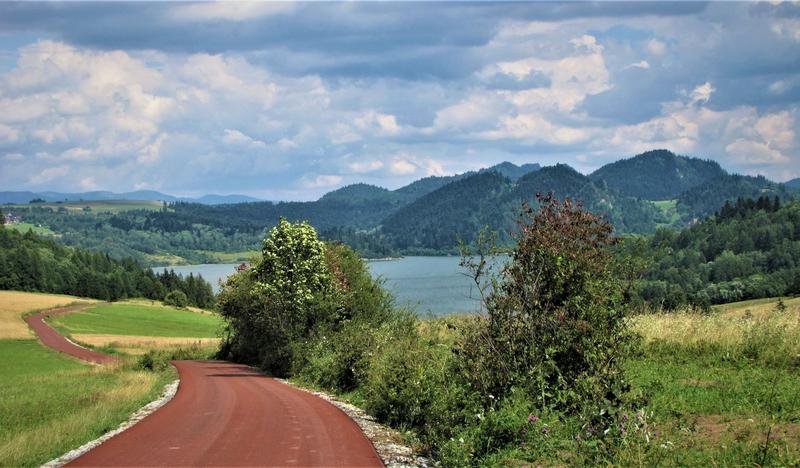
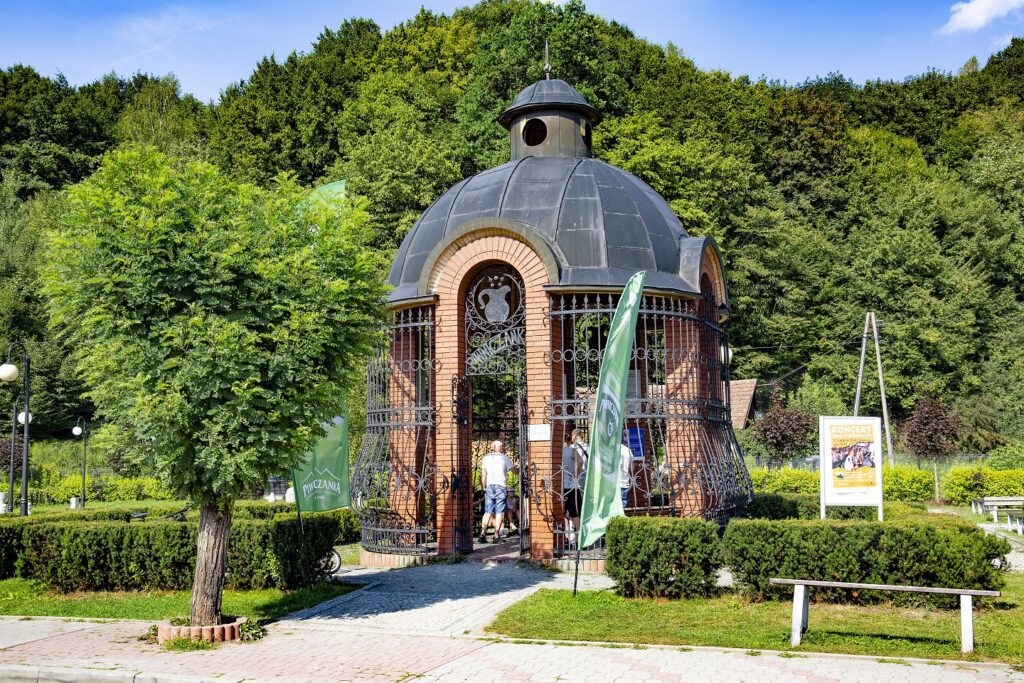
After visiting the ethnographic park, continue your journey towards Piwniczna-Zdrój, a charming health-resort town located about 20 kilometers further along the route. The road to Piwniczna-Zdrój is more hilly, offering some moderate climbs and rewarding downhill sections as you make your way through the valleys and forests of the region. Piwniczna-Zdrój is a spa town known for its mineral springs, which have been used for therapeutic purposes for centuries. Upon arrival, you can relax in one of the local health resorts or take a stroll along the town’s peaceful streets. The town is also a great base for exploring nearby natural attractions, such as the Poprad Landscape Park and the beautiful Poprad River.
Accommodation in a nice pension.
| Day 6 | > Piwniczna Zdroj > Krynica Zdroj (40 km cycling) |
Breakfast at your pension.
Route: Piwniczna Zdroj – Muszyna – Krynica Zdroj (distance: 40 km)
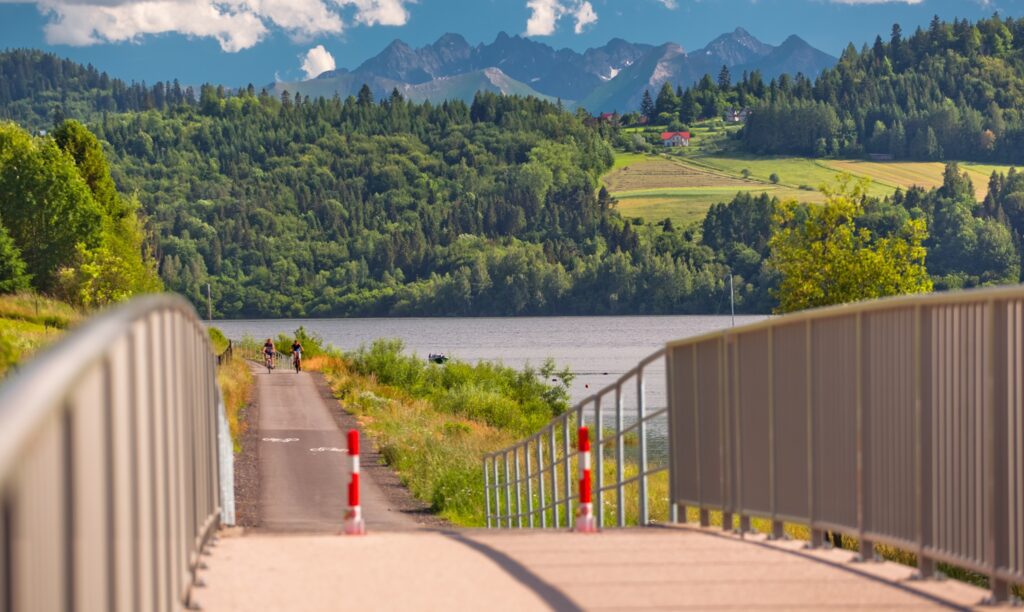
The cycling route takes you through the scenic and tranquil landscapes of the Poprad River Valley and the surrounding Carpathian Mountains. This route offers a combination of beautiful mountain views, charming towns, and relaxing spa resorts.
Your cycling adventure begins in Piwniczna-Zdrój, a charming health-resort town nestled in the heart of the Poprad Landscape Park.
After cycling for about 10 kilometers, you’ll arrive in Muszyna, a small, picturesque town known for its mineral waters and lush greenery. Muszyna is a popular spa destination, and it offers a great place to stop and relax. The town is surrounded by beautiful gardens, forests, and streams, making it a perfect spot for a peaceful break. You can explore the town’s botanical gardens or visit the Muszyna Mineral Water Pump Room to taste the local mineral waters. Muszyna is located in a valley, so getting here involves some light climbing, but the effort is rewarded with lovely views. The terrain around Muszyna is mostly rolling hills, with a few moderate climbs.
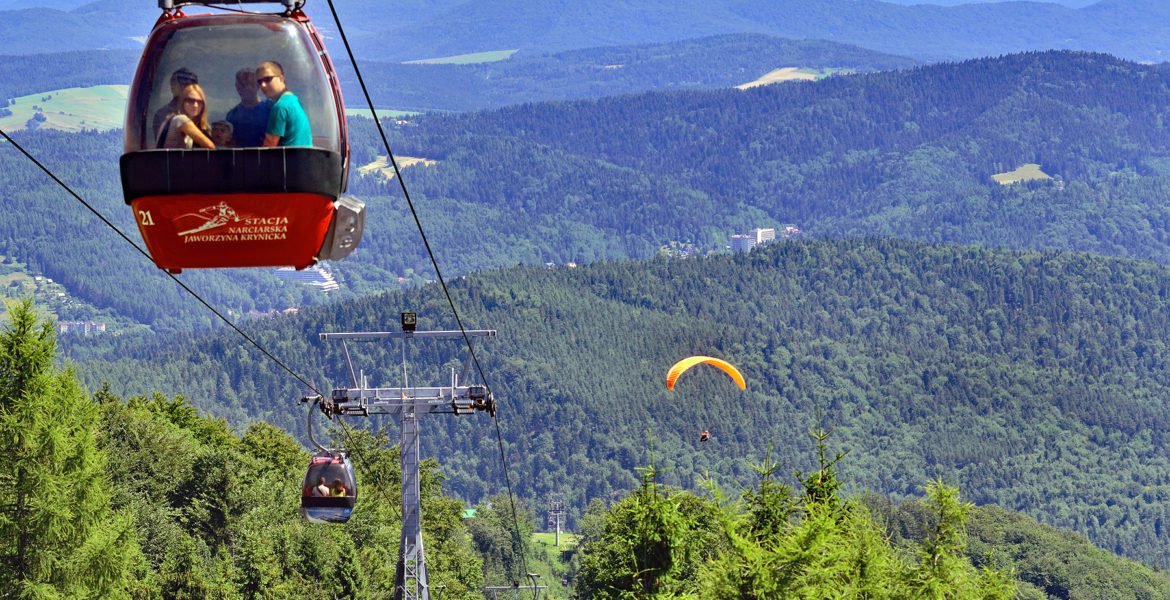
From Muszyna, continue cycling towards Krynica-Zdrój, a famous health-resort town located around 15 kilometers away. The route from Muszyna to Krynica-Zdrój involves some moderate climbs, but the ride is very scenic, with views of the surrounding mountains and valleys. Krynica-Zdrój is one of the most well-known spa towns in Poland, often referred to as the “Pearl of the Carpathians.” It has a rich history as a health and wellness destination, attracting visitors from all over the country. Upon arrival, you can explore the charming Krynica-Zdrój Market Square, stroll along the beautiful promenade, or relax in one of the local spa facilities. Krynica-Zdrój is also famous for its Ski Complex and the nearby Jaworzyna Krynicka, a mountain offering great views and outdoor activities year-round.
Ending today’s day at one of the local restaurants.
Accommodation in a nice pension.
| Day 7 | > Krynica Zdroj > Krakow |


Breakfast at your pension.
Today you will have the opportunity to explore one of the oldest SPAs in Poland.
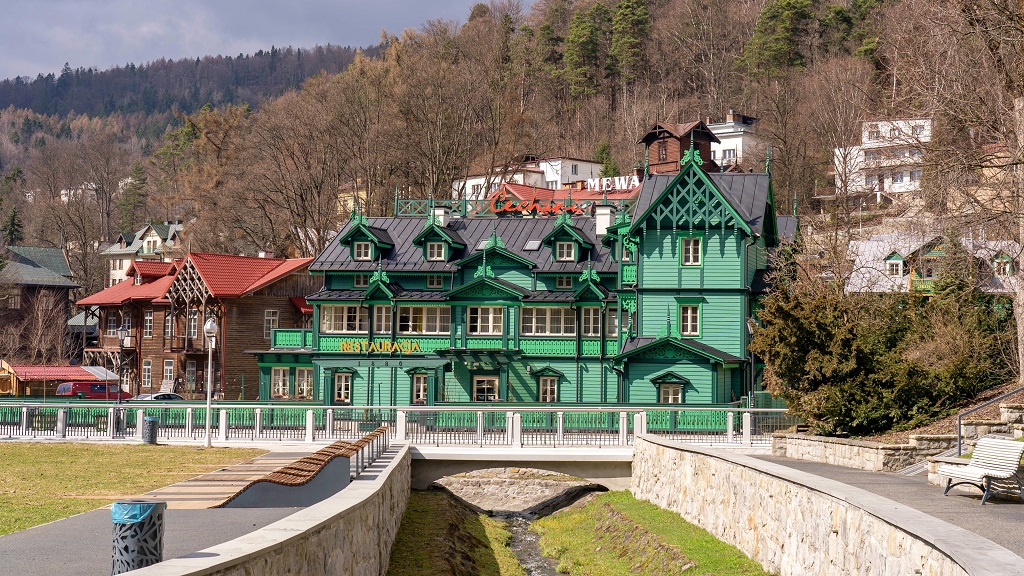
Krynica-Zdrój is a renowned health-resort town located in the Carpathian Mountains in southern Poland. Known as the “Pearl of the Carpathians,” it has been a popular spa destination for centuries, famous for its mineral springs with therapeutic properties. Visitors can enjoy its charming promenade, historic wooden architecture, and relaxing atmosphere. Krynica-Zdrój also offers outdoor activities, including skiing in winter on Jaworzyna Krynicka and hiking or cycling in the surrounding mountains. It’s a perfect place to relax, rejuvenate, and explore the natural beauty of the region.
Early afternoon – transfer from Krynica Zdroj to Krakow by bus.
Optional short tour in Krakow:
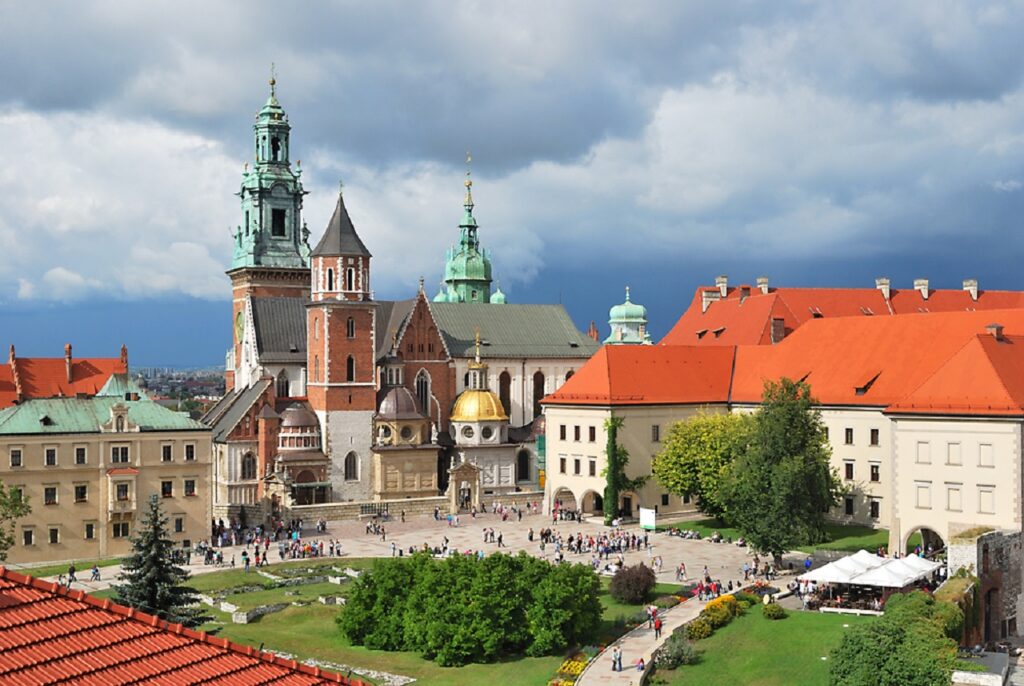
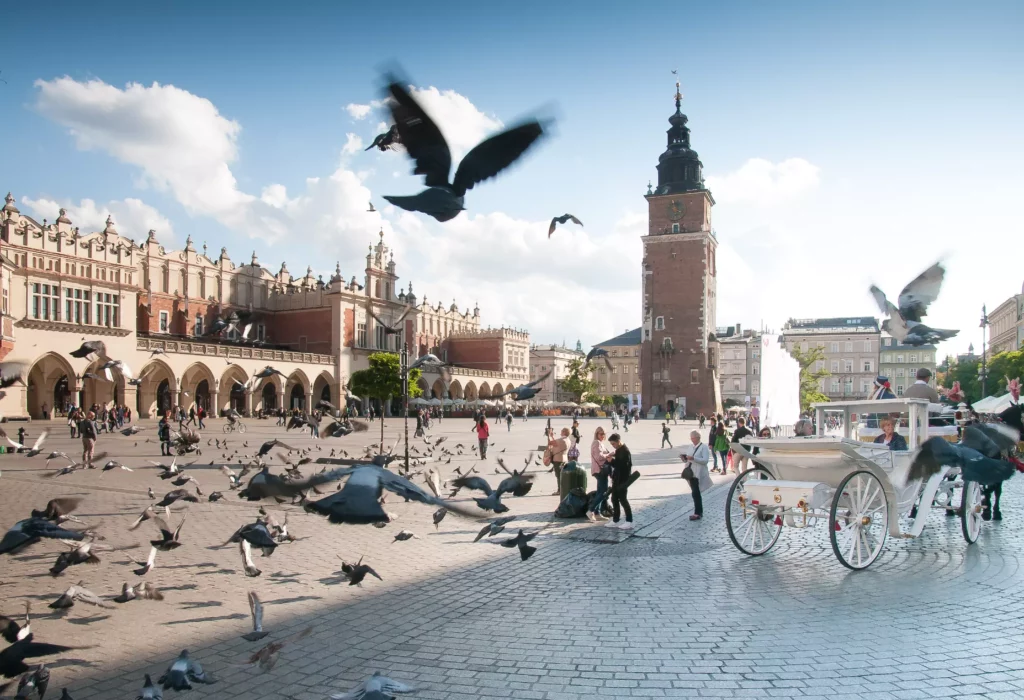
Krakow is the cultural capital of Poland with Old Town listed as UNESCO Heritage. During the tour you would see Barbican and defensive walls with Florian’s Gate, the Main Market Square with Sukiennice Cloth Hall, St Mary’s Church and Town Hall Tower. We would proceed to the Jagiellonian University, pass by Archbishop Palace (where John Paul II used to live) as well as St Andrew’s Church and St Peter and Paul’s Church to reach the Wawel Hill.
Accommodation in a hotel.
| Day 8 | > Krakow |

Breakfast at your hotel.
Transfer to the Balice airport in Krakow on your own.
END of SERVICES.
Contact us
If you want us to prepare a special trip for you, please write us specifying all your requirements. We will be happy to answer.
E-Bike Adventure along the Velo Dunajec Trail – a continuous cycling journey through mountains, rivers, and Poland’s most scenic landscapes
If you are looking for an active journey that combines natural beauty, cultural depth, and a sense of progression, this e-bike adventure along the Velo Dunajec trail offers one of the most complete ways to experience southern Poland. The route follows the natural flow of the Dunajec River, creating a travel experience that feels continuous, coherent, and deeply connected to the surrounding landscape.
This is not a random sequence of locations connected by transport. It is a structured journey where every stage builds on the previous one, allowing you to experience how terrain, atmosphere, and perspective evolve over time.
Why the Velo Dunajec route stands out as one of the most diverse cycling experiences in Poland
What makes this route unique is not only its length, but the variety it offers within a single journey. Starting in the foothills of the Tatra Mountains, the trail gradually leads through river valleys, mountain ranges, lakes, and open landscapes, creating a dynamic experience that constantly changes without losing its natural continuity.
Instead of repeating similar scenery, each stage introduces a new environment. The transition from mountainous terrain to gentler landscapes happens naturally, allowing you to feel the geography rather than simply observe it. This creates a sense of movement that is both physical and emotional.
A journey shaped by the rhythm of the Dunajec River
The Dunajec River is not just a background element of this itinerary. It defines the entire structure of the journey. By following its course, the route creates a natural direction that feels intuitive and organic.
Cycling alongside the river allows you to experience subtle changes in the landscape as they happen. The surroundings shift gradually, the perspective evolves, and the rhythm of the journey becomes aligned with the environment itself. This creates a travel experience that feels less constructed and more natural.
From the Tatra foothills to the dramatic landscapes of the Pieniny Mountains
The early stages of the journey introduce the mountainous character of southern Poland. Starting near Zakopane, the route immediately immerses you in an environment defined by open space, altitude, and strong natural contrasts.
As the journey continues, the terrain becomes more varied. Wider valleys begin to appear, and the landscape opens up, creating a smooth transition from high mountains to more accessible environments. This progression allows the experience to remain dynamic without becoming overwhelming.
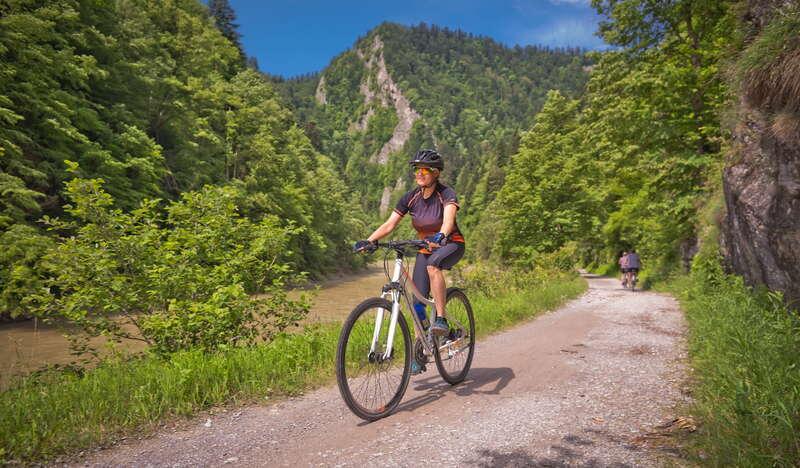
One of the most memorable parts of the route is the passage through the Pieniny Mountains. Here, the river cuts through narrow gorges, creating dramatic scenery with steep cliffs and panoramic views. This section is often considered the visual highlight of the entire journey, offering a combination of scale, contrast, and natural intensity.
Lakes, castles, and cultural layers integrated into the landscape
As the route develops, it introduces elements that go beyond nature, but without breaking the continuity of the experience. Around areas such as Lake Czorsztyn, the landscape changes again, combining water, mountains, and historical architecture into a single visual composition.
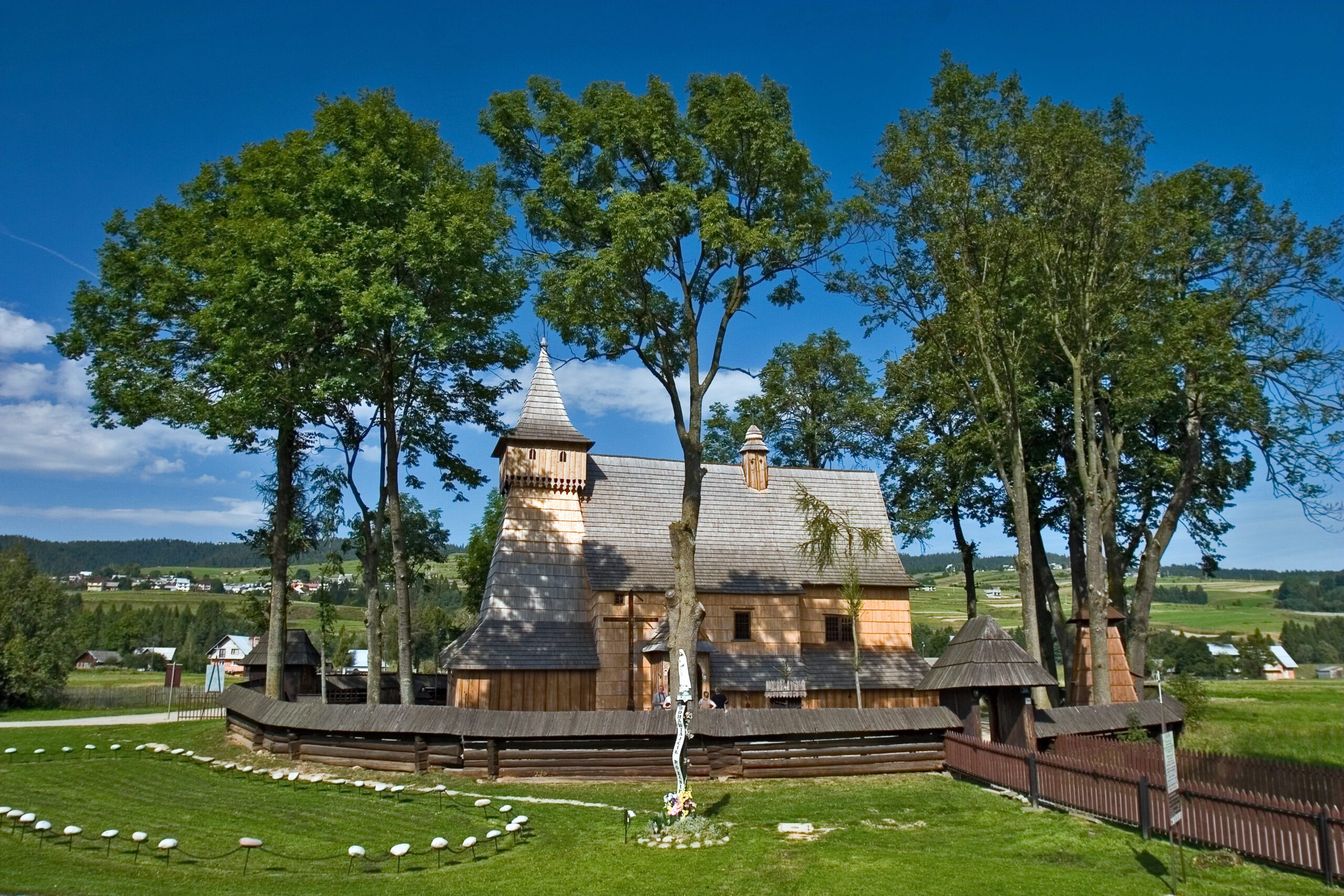
Castles such as Czorsztyn and Niedzica appear as natural parts of the scenery rather than isolated attractions. They define the character of the region and create strong visual moments within the journey. Traditional villages, wooden structures, and small towns add further depth, reflecting the cultural identity of southern Poland without feeling staged or artificial.
E-bike support as a tool for expanding the experience
The use of e-bikes is a key element that shapes the entire journey. It allows the route to include a wider range of terrain while maintaining a consistent level of comfort. Instead of limiting the experience to flat or easy sections, the itinerary can incorporate more diverse landscapes without turning the journey into a physical challenge.
This changes the focus of the experience. Rather than concentrating on effort, you are able to engage with the surroundings, observe details, and maintain a steady rhythm throughout the day. The result is a balance between activity and accessibility that enhances the overall quality of the journey.
A slower rhythm that changes how you experience travel
One of the defining differences between this itinerary and standard tours is the pace. Instead of moving quickly between destinations, the journey unfolds gradually, allowing you to notice changes in terrain, light, and atmosphere.
This slower rhythm creates space for observation and reflection. Small details become more visible, transitions feel more meaningful, and the experience becomes more personal. The journey is no longer about reaching a destination, but about experiencing everything that happens along the way.
A balanced combination of nature, culture, and movement
This itinerary does not focus on a single aspect of travel. It combines multiple elements into one cohesive experience. Nature is present throughout the journey, but it is complemented by cultural landmarks and a structured route that maintains continuity.
The level of physical activity is designed to enhance the experience rather than dominate it. This creates a balance that makes the journey engaging without becoming exhausting.
Who is this journey designed for?
This program is particularly well suited for travelers who want more than a standard sightseeing experience. It appeals to those who enjoy being active, value authenticity, and are interested in landscapes that change and evolve over time.
At the same time, the use of e-bikes makes the journey accessible to a wide range of participants, including those who may not consider themselves experienced cyclists. It is an ideal option for individuals, couples, and small groups looking for a more immersive way to explore Poland.
How seasonality shapes the experience
The character of the route changes depending on the season, but it remains attractive throughout the main travel periods. Spring introduces fresh landscapes and a sense of clarity, while summer offers long days and stable conditions for extended stages.
Early autumn enhances the visual experience with warmer tones and a quieter atmosphere, especially in less crowded areas. Each season adds a different layer to the journey without changing its core structure.
Why this journey creates a more lasting impression
What makes this itinerary stand out is the way it combines structure with natural flow. By following the course of the river and connecting diverse regions into a single route, it creates a journey that feels coherent and complete.
Instead of visiting isolated locations, you experience how they relate to each other. This creates a deeper understanding of the region and a stronger emotional connection with the places you pass through.
How to decide if this e-bike journey is right for you
If you are looking for a travel experience that combines scenic landscapes, cultural context, and active exploration without unnecessary intensity, this program offers a well-balanced solution. It is particularly suitable for those who want to move beyond typical tourist routes and experience Poland in a more natural and engaging way.
FAQ
Do I need advanced cycling experience for this tour?
No, the use of e-bikes makes the journey accessible to a wide range of participants.
How demanding is the route?
The route is designed to be moderate, with variations in terrain that are manageable with electric support.
What type of landscapes can I expect?
The journey includes mountains, river valleys, lakes, and traditional rural areas.
Are there cultural highlights along the route?
Yes, including castles, historic villages, and regional architecture integrated into the landscape.
Is this tour suitable for beginners?
Yes, especially for those who want an active experience without high physical intensity.