


Classic Poland
8 days / 7 nights
Discover the classic of Poland, the most famous cities in the country and the delicious cuisine.
| Day 1 | > Warsaw |


Welcome to Poland !
Arrival to Warsaw. Transfer to the hotel and check-in.
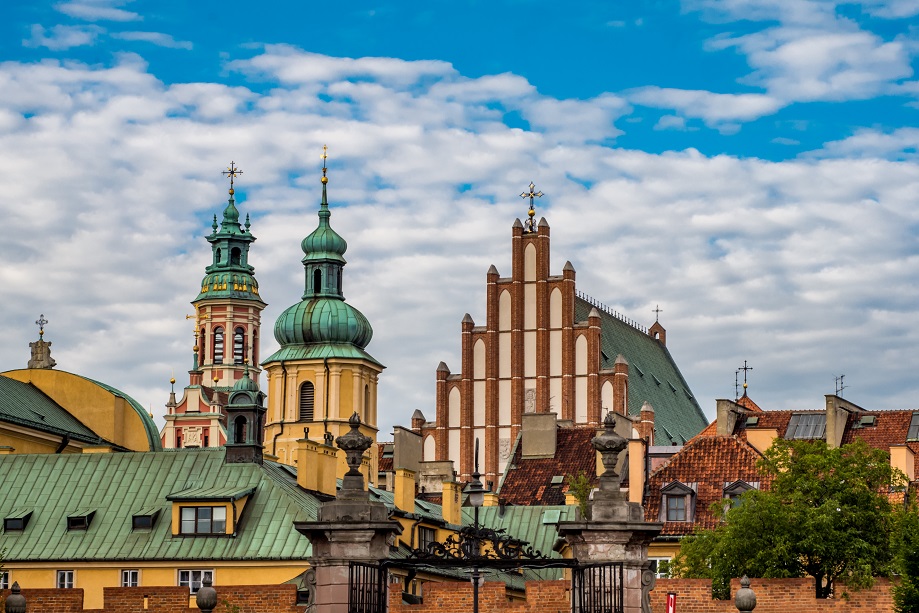
In the evening we invite you to Chopin’s concert. Nestled in the cobblestone streets of the Old Town of Warsaw stands a unique neoclassical concert hall with original “plaster stucco” walls, crystal mirrors, and stylish nineteenth century decorations. As you walk through the doors, you will step into the era of Chopin for a two-part ensemble of Chopin’s greatest pieces played by internationally recognized pianists. During the intermission, you will be invited to a glass of sparkling wine, orange juice, or water. This concert is both a perfect start and/or finishing touch to a romantic evening in the Old Town. If you are starting your night with the concert, you may choose to end it in one of the many restaurants that our beautiful old town has to offer.
Accommodation in a centrally located hotel in Warsaw.
| Day 2 | > Warsaw |


Breakfast at your hotel.
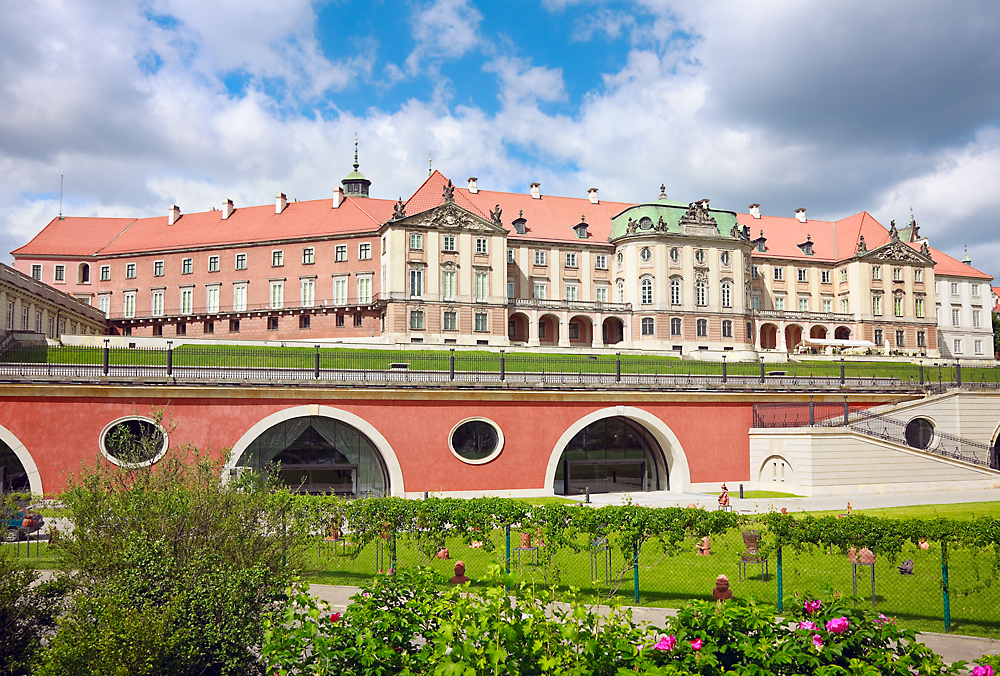
Visit Warsaw – the capital city of Poland. During this tour, we will visit the most important spots in the city and will have an opportunity to become acquainted with the sometimes tragic past of Warsaw and the history of Poland. We will start our tour by visiting the Old Town, which is a UNESCO World Heritage Site and the New Town. We will continue our journey to Krasinski Palace, the Supreme Court building and the Warsaw Uprising Monument. After that, we will go to the Lazienki Royal Park where we will see the famous monument dedicated to Frederic Chopin where we will have an opportunity to relax in the beautiful rose garden and among the dazzling natural elements of the park. You will truly forget that you are in a major European Capital City.
Free time for lunch.
Afternoon transfer to Wilanow Palace, one of the most beautiful architecture monument in Warsaw called “The Little Versailles”. The typical baroque palace is remarkable for its original architecture, a blend of the European art with the Old-Polish building tradition. During this trip you could visit the royal summer residence of the King John III Sobieski on the outskirts of a city with a beautiful French style garden and a landscape park.
Accommodation in a centrally located hotel in Warsaw.
| Day 3 | > Warsaw > Torun > Poznan |


Breakfast at your hotel.
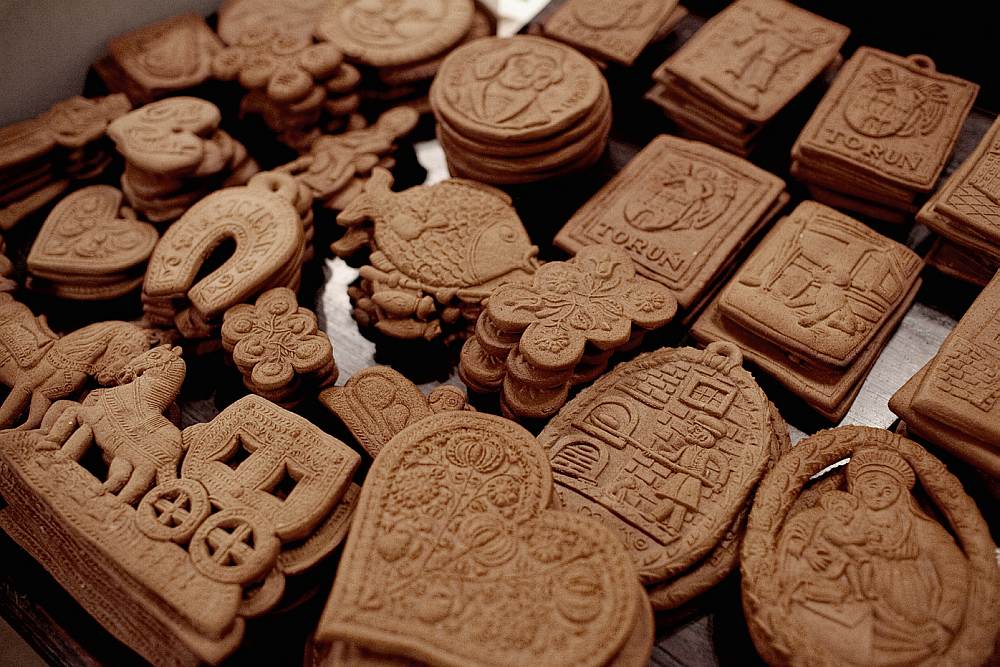
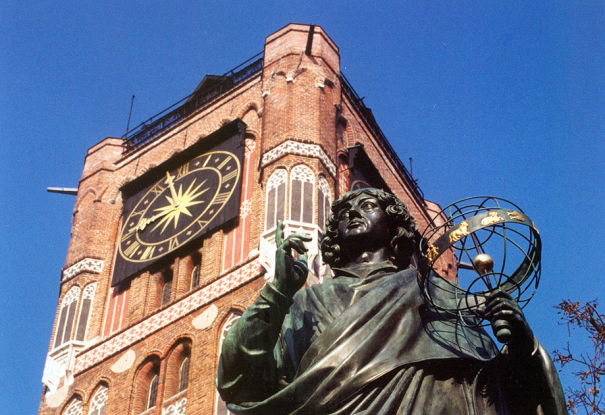
Transfer from Warsaw to Torun, the best example of medieval gothic town (UNESCO Heritage) and birthplace of great Polish astronomer Nicolaus Copernicus who made a crucial discovery that the Earth is not the centre of universe. During the walk along the Old Town we would visit the Copernicus House and the Cathedral with a bell tower offering a splendid view over the city. Time for a souvenir hunt could be a chance to try gingerbread – a speciality the city is famous for, that is baked according to old recipes and methods dating back to the 16th century.
Free time for lunch.
Continue to Poznan.
Accommodation in a centrally located hotel in Poznan.
| Day 4 | > Poznan > Wroclaw |


Breakfast at your hotel.
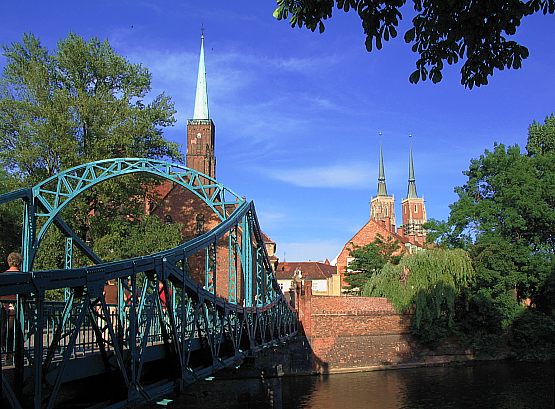
Transfer from your hotel through the heart of Poznan city would be a chance to see the Mickiewicz Square with the Collegium Maius building, the Opera House, the Mickiewicz University and the magnificent Imperial Castle dating back to 20th century. Further drive to the picturesque Srodka district would start a visit to the gothic Cathedral on the island of Ostrow Tumski, the place of baptism of Poland in 966. Passing the Chrobry Bridge, we enter the splendid Old Town famous for the renaissance Town Hall dominating over the Market Square. Walking along charming streets, we discover the impressive baroque church and the Franciscan Church with a miniature model of old Poznan. Finally we reach the Freedom Square surrounded by 19th century historical buildings: National Museum, Raczynski Library, Bazar Hotel and Arcadia.
Free time for lunch.
Transfer from Poznan to Wroclaw
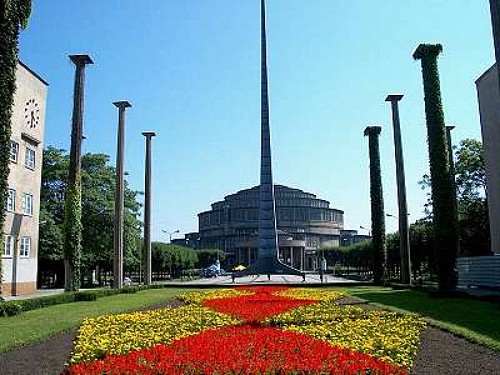
Welcome to magic Wroclaw – the City of 100 Bridges. Its rich history and medieval character attracts millions of tourists every year. After arrival we visit the 13th century Cathedral of St. John the Baptist located on Ostrow Tumski island – the oldest part of the city. Crossing the bridge over Odra River, we enter the Old Town to see Wroclaw University famous for Aula Leopoldina – representative baroque hall. Further walk around medieval cobblestone streets leads to the Market Square, one of the largest in Europe, surrounded by old tenement houses with the gothic Town Hall in the centre.
Accommodation in a centrally located hotel in Wroclaw.
| Day 5 | > Wroclaw > Moszna > Czestochowa > Krakow |


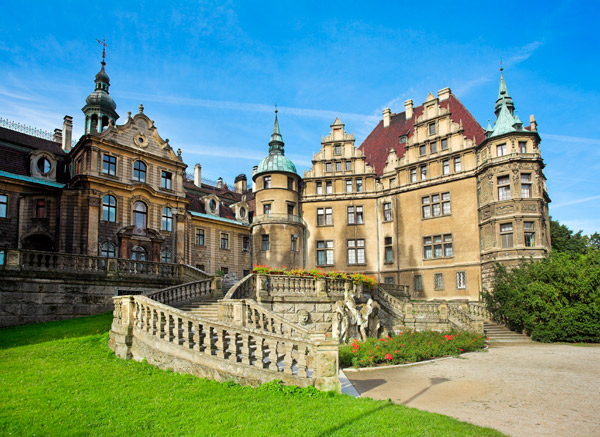
Breakfast at your hotel.
Transfer from Wroclaw to Moszna Castle.
The castle in Moszna is one of the best known monuments in the southern Poland. The castle and park complex is the former residence of the German Tiele-Winckler family. This gigantic 7,000 square and 65,000 cubic meter construction was started in the 17th century. It contains 365 rooms and 99 turrets. It is reminiscent of English castles from the Elizabethan period. The stud farm with thoroughbred Arab horses attracts many enthusiasts of equestrian sports. Apart from the castle itself, the entire complex includes a park which has no precised boundaries and combines with the nearby fields, meadows and a forest.
Continue to Czestochowa.
Free time for lunch.
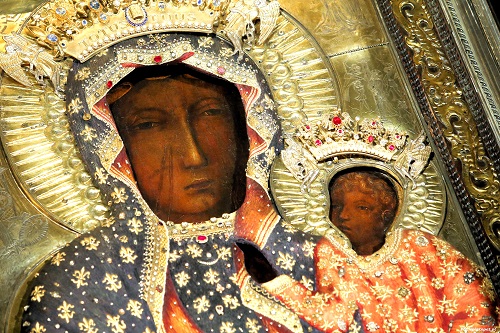
Czestochowa is known for the famous Pauline monastery of Jasna Gora that is the home of the Black Madonna painting, a shrine of the Virgin Mary. She is the Queen of Poland that the whole nation and country was entrusted to. This spiritual capital of Poland every year attracts thousands of pilgrims from all over the world. During your trip you could visit: the Basilica with Black Madonna Shrine, the exhibition devoted to the 600-years of the Monastery, the Armoury Room and the Treasury Room.
Transfer from Czestochowa to Krakow
Accommodation in a centrally located hotel in Krakow.
| Day 6 | > Krakow |


Breakfast at your hotel.
Krakow is the cultural capital of Poland with Old Town listed as UNESCO Heritage. During the tour you would see Barbican and defensive walls with Florian’s Gate, the Main Market Square with Sukiennice Cloth Hall, St Mary’s Church and Town Hall Tower. We would proceed to the Jagiellonian University, pass by Archbishop Palace (where John Paul II used to live) as well as St Andrew’s Church and St Peter and Paul’s Church to reach the Wawel Hill.
Free time for lunch.
Kazimierz used to be a separate town close to medieval city of Krakow. It was mostly populated by Jewish community. Throughout years it became Krakow’s district, but the abundance of markets, synagogues and kirkuts (Jewish cemeteries) shaped character of this part of town. As Kazimierz depicts the history of Polish Jews, some shots of Steven Spielberg Schindler’s List were captured here. During this tour you would discover this charming part of Krakow with its monuments and complexed history.
Accommodation in a centrally located hotel in Krakow.
| Day 7 | > Krakow > Wieliczka > Warsaw |


Breakfast at your hotel.
Transfer from Krakow to Wieliczka the most beautiful and the oldest operating salt mine in the world (UNESCO Heritage). From over 700 years it was a source of Polish fortune and a physical fundament of culture. Today Wieliczka is the most willingly visited Polish tourist object with magnificent chapels, charming underground lakes and original tools and equipment. During this tour you could see a number of excavated chambers on 3 levels adorned with beautiful sculptures made of salt as well as a salt museum.
Free time for lunch.
Continue to Warsaw.
Accommodation in a centrally located hotel in Warsaw.
| Day 8 | > Warsaw |


Breakfast at your hotel.
Transfer to the airport in Warsaw.
END of SERVICES.
Contact us
If you want us to prepare a special trip for you, please write us specifying all your requirements. We will be happy to answer.
Classic Poland tour – explore the country’s most iconic destinations through a complete multi-day journey
Experience Poland through a structured, multi-day journey that connects the country’s most important cities, historical landmarks, and cultural regions into one coherent itinerary. This program is designed for travelers who want a comprehensive overview of Poland without the need to plan routes, logistics, or timing independently.
Instead of focusing on a single destination, you follow a carefully built route that reflects the natural travel flow across the country. From Warsaw to Krakow, with key stops along the way, each day adds a new layer of understanding, combining history, architecture, culture, and local context into one continuous experience.
This itinerary is developed by regional specialists with direct operational experience, ensuring that distances, pacing, and daily structure are aligned with real travel conditions rather than theoretical planning.
What makes a “classic Poland” itinerary different from other tours?
A classic tour is designed to cover the most important and recognizable destinations within a single program. It focuses on places that define the identity of the country and are considered essential for first-time visitors.
This includes:
- major cities that represent different regions and historical periods
- UNESCO-listed sites and architectural landmarks
- locations with strong cultural, religious, or historical significance
The goal is not to explore one area in depth, but to provide a complete and structured overview of the country within a limited timeframe.
A complete route across Poland – how the journey is structured
The strength of this program lies in its route. Instead of returning to the same location, you move through the country in a logical sequence, which allows you to experience more without unnecessary backtracking.
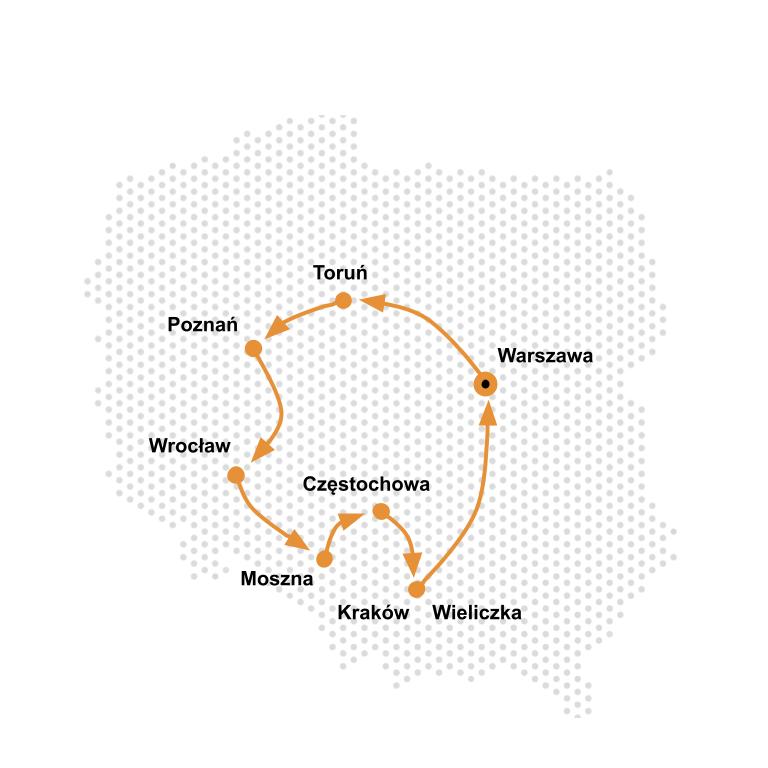
The itinerary typically connects:
- Warsaw as the starting point and modern capital
- Toruń as a preserved medieval city
- Poznań as an important historical and cultural center
- Wrocław as a unique architectural and urban destination
- Częstochowa as a key religious site
- Krakow as the cultural capital of Poland
- Wieliczka as one of the most distinctive heritage attractions
This structure ensures that each destination adds something different to the overall experience.
Local expertise and long-distance travel coordination
Multi-day tours require a high level of coordination. Distances between cities, timing of visits, and transitions between locations all impact the quality of the experience.
This program is designed by specialists who:
- understand how to balance travel time with sightseeing
- select routes that reflect real accessibility between destinations
- structure each day to avoid fatigue while maintaining intensity
- integrate key highlights without overloading the schedule
This level of planning is difficult to achieve without local operational knowledge.
Warsaw – the starting point of the journey
The tour begins in Warsaw, which provides an introduction to modern Poland and its complex history. The city represents resilience, transformation, and contemporary urban development.
Here, you gain initial context that helps you understand the rest of the journey, including Poland’s historical background and cultural identity.
Central Poland – history, heritage, and regional identity
As the journey continues, the focus shifts to smaller cities and regions that reveal different aspects of Poland.
Toruń introduces medieval architecture and historical continuity. Poznań reflects early Polish statehood and urban development. Wrocław offers a distinct atmosphere shaped by diverse historical influences and unique urban layout.
Each of these destinations expands your perspective beyond the capital and shows how varied the country is.
Southern Poland – culture, religion, and tradition
The southern part of the itinerary introduces another dimension of the experience.
Częstochowa represents the spiritual significance of Poland, attracting visitors for its religious heritage. Krakow, in contrast, focuses on cultural continuity, architecture, and historical preservation.
This combination creates a balance between cultural, religious, and historical elements, making the journey more complete.
Unique highlights that define the experience
Beyond cities, the program includes locations that stand out on a global scale.
One of the most distinctive is the Wieliczka Salt Mine, known for its underground chambers, historical significance, and unique visual character.
Experiences like this add variety to the itinerary and ensure that the journey goes beyond standard city exploration.
Who is this tour designed for?
This program is particularly suitable for:
- first-time visitors who want a complete overview of Poland
- travelers who prefer structured, multi-day itineraries
- people interested in history, culture, and architecture
- those who want to see multiple regions without planning complex logistics
It is less suitable for travelers who prefer slow travel or want to focus deeply on a single destination.
When is the best time to take a classic Poland tour?
This type of journey works well throughout most of the year, but the experience changes depending on the season.
Spring and early autumn offer the best balance between weather and comfort. Summer provides longer days and more activity, while winter creates a more atmospheric and quieter version of the same route.
Because this is a multi-day program, choosing the right season can significantly influence the overall experience.
Travel logistics and what to expect during the tour
This itinerary is designed to remove the complexity of long-distance travel across multiple cities.
You can expect:
- coordinated transport between destinations
- centrally located accommodation
- structured daily schedules
- smooth transitions between locations
Poland’s infrastructure supports this type of travel, making it efficient and predictable even across longer distances.
Why a classic multi-day tour is the most efficient way to explore Poland
Exploring Poland independently across multiple cities requires significant planning, coordination, and time. A structured multi-day tour simplifies this process while maintaining a high level of experience.
This format allows you to:
- see multiple regions within a single trip
- avoid logistical challenges related to transport and accommodation
- follow a route that has been optimized for efficiency and flow
As a result, you gain a comprehensive understanding of the country without unnecessary complexity.
FAQ
How long does the Classic Poland tour usually last?
Most classic itineraries are designed for around one week, allowing enough time to visit multiple cities without excessive travel fatigue.
Is this tour suitable for first-time visitors?
Yes, it is one of the best options for first-time visitors who want a complete overview of Poland.
Do I need to organize transport between cities?
No, transport is typically included and coordinated as part of the itinerary.
How intensive is the program?
The itinerary is structured to balance travel and sightseeing, but it is still a dynamic program covering multiple destinations.
Can this tour be customized?
Yes, in many cases the program can be adjusted or extended depending on your preferences.