


Poland on the tracks
9 days / 8 nights
Discover Poland travelling by train. Learn more about the history of railways in Poland. Take the controls of a historical locomotive.
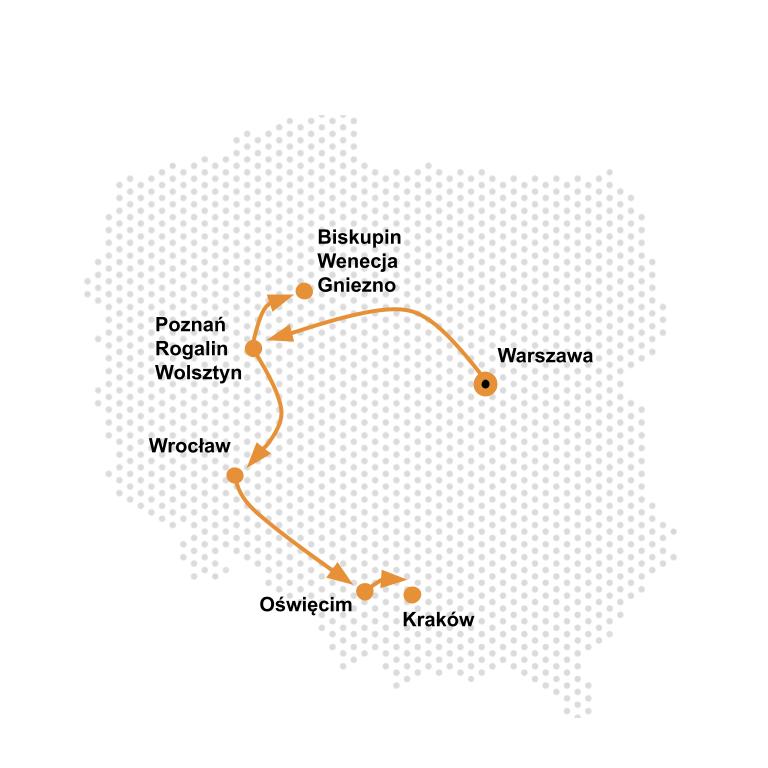
| Day 1 | > Warsaw |
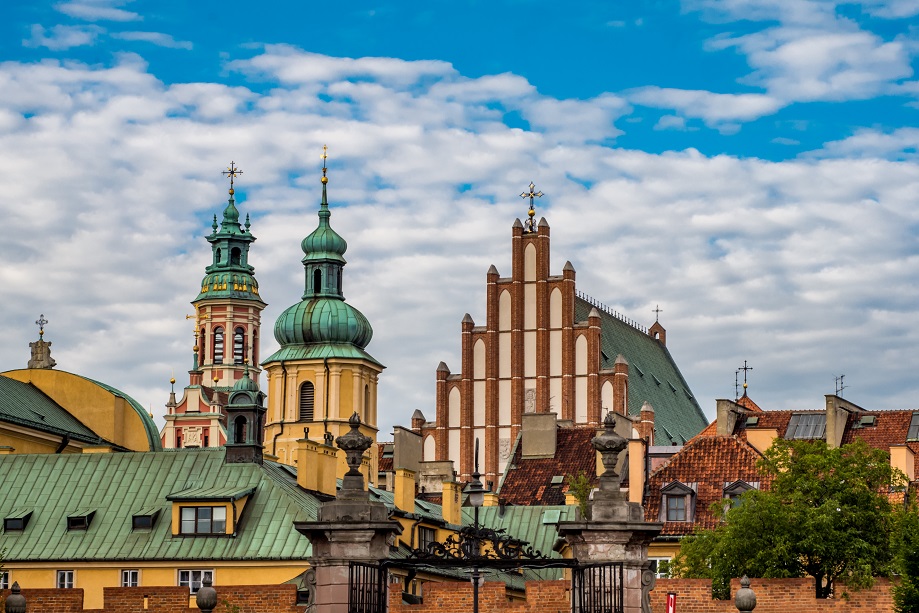
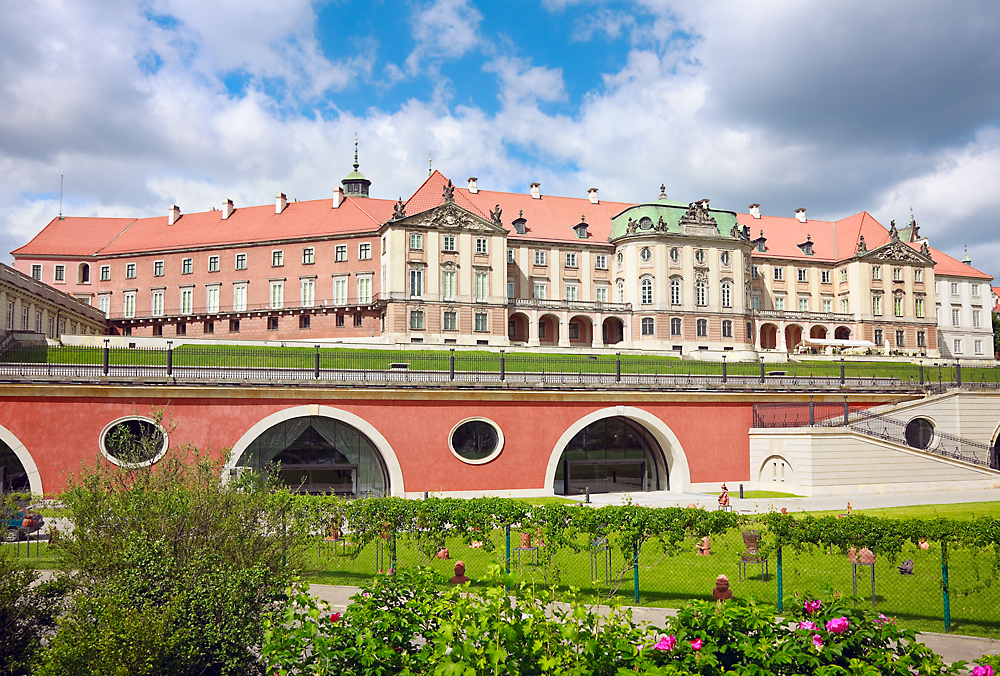


Welcome to Poland !
Arrival to Warsaw. Transfer to the hotel and check-in.
Dinner in a local restaurant or hotel.
Accommodation in a centrally located hotel in Warsaw.
| Day 2 | > Warsaw |


Breakfast at your hotel.
Visit Warsaw – the capital city of Poland. During this tour, we will visit the most important spots in the city and will have an opportunity to become acquainted with the sometimes tragic past of Warsaw and the history of Poland. We will start our tour by visiting the Old Town, which is a UNESCO World Heritage Site and the New Town. We will continue our journey to Krasinski Palace, the Supreme Court building and the Warsaw Uprising Monument. After that, we will go to the Lazienki Royal Park where we will see the famous monument dedicated to Frederic Chopin where we will have an opportunity to relax in the beautiful rose garden and among the dazzling natural elements of the park. You will truly forget that you are in a major European Capital City.
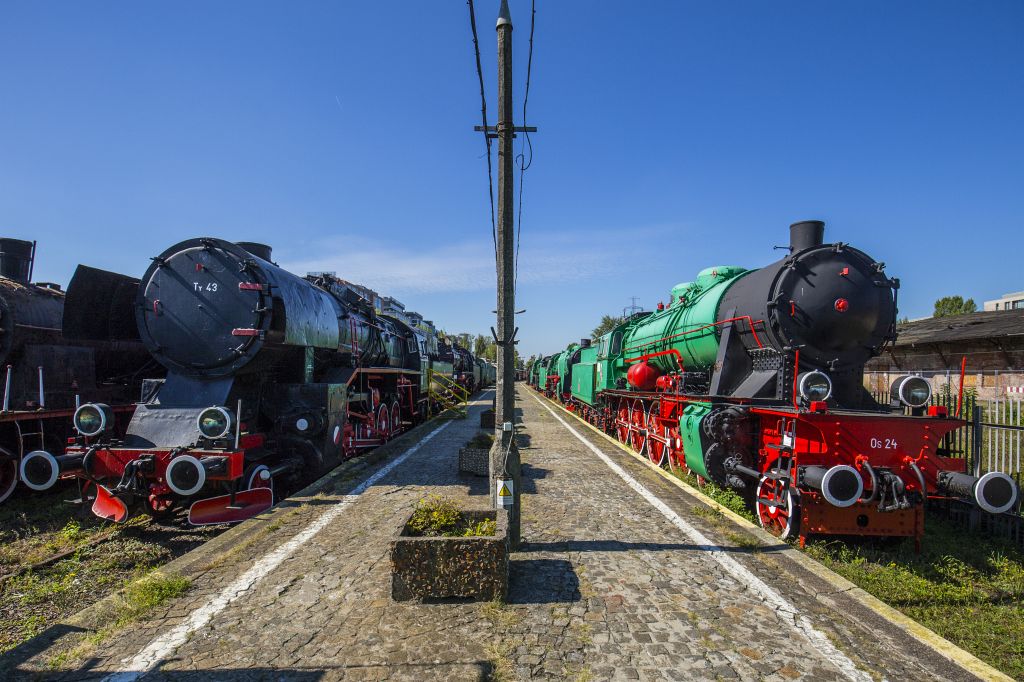
Who when they were young did not want to work on the railways? In Stacja Museum, you can fulfill this dream! The museum displays unique uniforms, railway models, old telephones, tickets from over a century ago and many other treasures. But the most impressive are the trains and locomotives – some of them are the only examples in the world.
The Station Museum is housed in the historic building of the former Warsaw Main Railway Station – until 1967 the most important station in the capital. The complex survived World War II almost unharmed and to this day it impresses with its original track layout, being the only existing memento in the capital of the Warsaw-Vienna Railway, which once connected the Russian Empire with Europe.
Dinner in a local restaurant or hotel.
Accommodation in a centrally located hotel in Warsaw.
| Day 3 | > Warsaw > Poznan |


Breakfast at your hotel.
Transfer to Warszawa Centralna train station.
Travel by train to Poznan.
Arrival to Poznan Glowny train station. Transfer to the hotel and check-in.
Poznan sightseeing. The tour starts from a visit to the Brama Poznania (Porta Posnania). Here you can discover the story of the beginnings of the Polish state and the Cathedral Island. This ineractive museum presents the history in a modern way, with multimedia and light.
Then visit to the gothic Cathedral on the Ostrow Tumski island, place of baptism of Poland in 966. Passing the Chrobry Bridge, we enter the splendid Old Town famous for the renaissance Town Hall dominating over the Market Square. Stroll along charming streets to discover the impressive baroque church and the Franciscan Church with a miniature model of medieval Poznan. Further walk to the Freedom Square surrounded by 19th century historical buildings: National Museum, Raczynski Library, Bazar Hotel and Arcadia.
Dinner in a local restaurant or hotel.
Accommodation in a centrally located hotel in Poznan.
| Day 4 | > Poznan > Gniezno > Biskupin > Wenecja > Poznan |


Breakfast at your hotel.
Transfer to Gniezno – Poland’s first capital. With an impressive cathedral overlooking to the charming Old Town avenues, it holds an important place in the royal and religious history of the country.
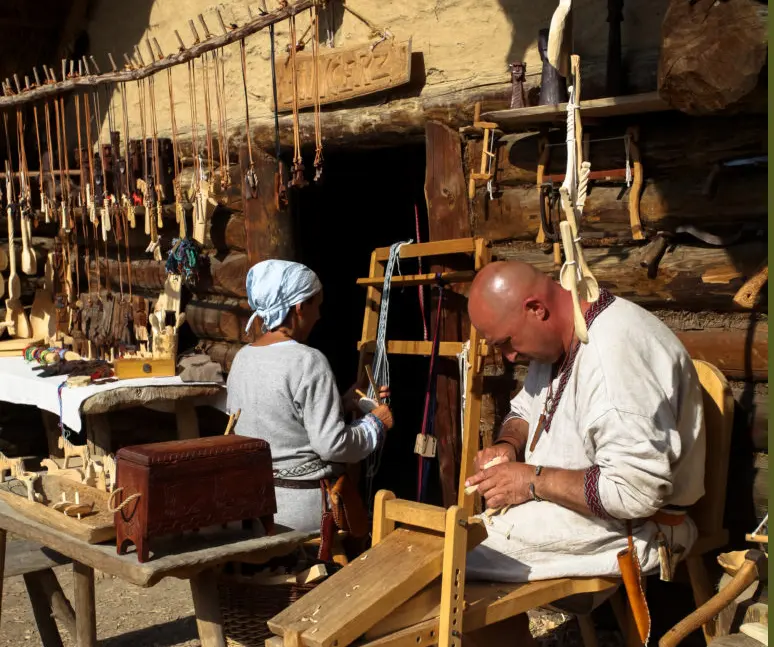
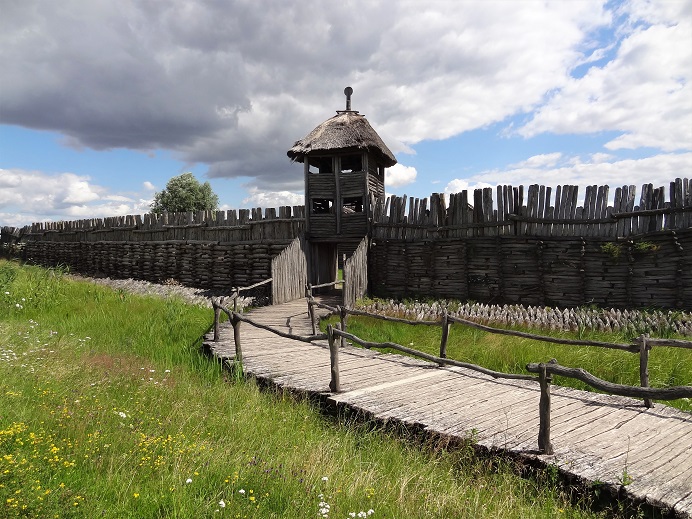
Transfer to Biskupin – the best known archaeological reserve in Central Europe. When first discovered it was thought to be early evidence of a West Slavic settlement, but archaeologists later confirmed it belonged to the Biskupin group of the Lusatian culture from the 8th century BC. Visit to the oldest settlement in Poland. The undoubted advantage of Biskupin is showing “living history”. You can see not only reconstructions of houses from thousands years ago, but also learn about the habits of the people who used to live here, their work and craftsmanship. However, you do not gain this knowledge by listening to lengthy lectures, but by yourself participating in the daily activities of our ancestors.
After the sigtseeing we continue our trip to Wencja by narrow gauge railway! It has been a characteristic element of the Paluki landscape for over a century. Today it is used by tourists, but in the 19th and 20th centuries it was the main means of transport in the region. The railway transported agricultural produce, mail and various goods, it was also a means of passenger transport – the inhabitants of Paluki used it to travel to work, school and shopping. The funicular started its operation in 1894. The network of connections was about 80 km long. Regular passenger trains ran until 1968.
Visit to the Narrow Gauge Railway Museum in Wenecja (Polish Venice), an open-air museum collecting and exhibiting steam locomotives, passenger and freight cars, trolleys, railwaymen’s tools, signalling equipment, contents of an old waiting room, old maps. The Museum has collected numerous steam locomotives. One of the oldest is the German one made by Orenstein & Koppel in Berlin in 1900. The Tx-1116 locomotive made by Henschel & Son (Kassel, 1918) and the Tx4-564 locomotive made by Hanomag (Hannover, 1923) are also very interesting. A real rarity is the Belgian locomotive No.2179 made by Les Ateliers Metallurgiques Nivelles with the unique wheel arrangement 4-6-2 (“Pacific”), and the only one which has steam brakes. Transfer back to Poznan.
Dinner in a local restaurant or hotel.
Accommodation in a centrally located hotel in Poznan.
| Day 5 | > Poznan > Rogalin > Wolsztyn > Wroclaw |


Breakfast at your hotel.
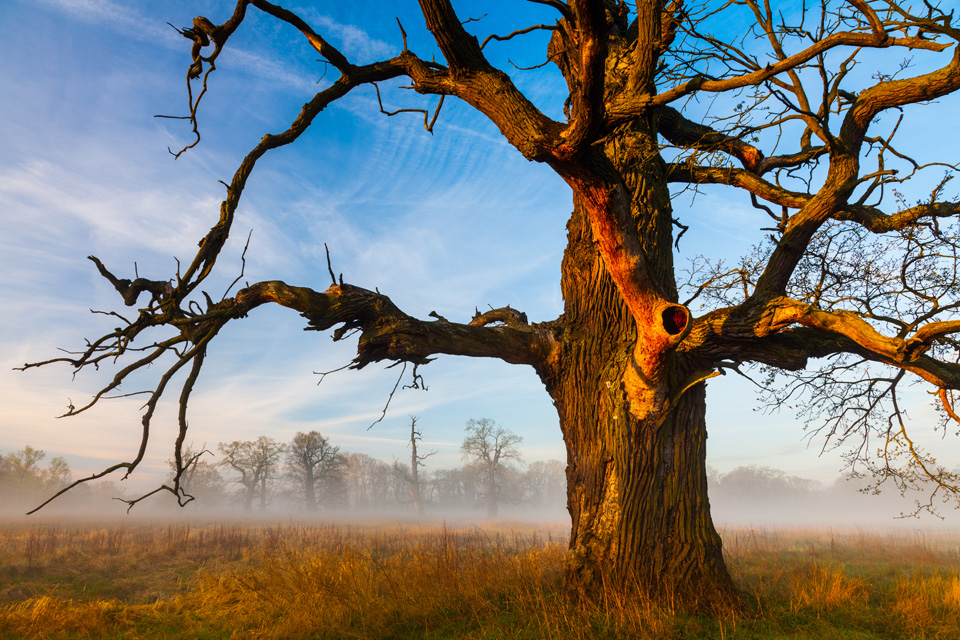
Transfer to Rogalin and sightseeing the splendid landscape gardens with the biggest oak trees collection in Europe. Nearby you can admire the rococo – neoclassical palace of Raczynski family dating from 18th century.
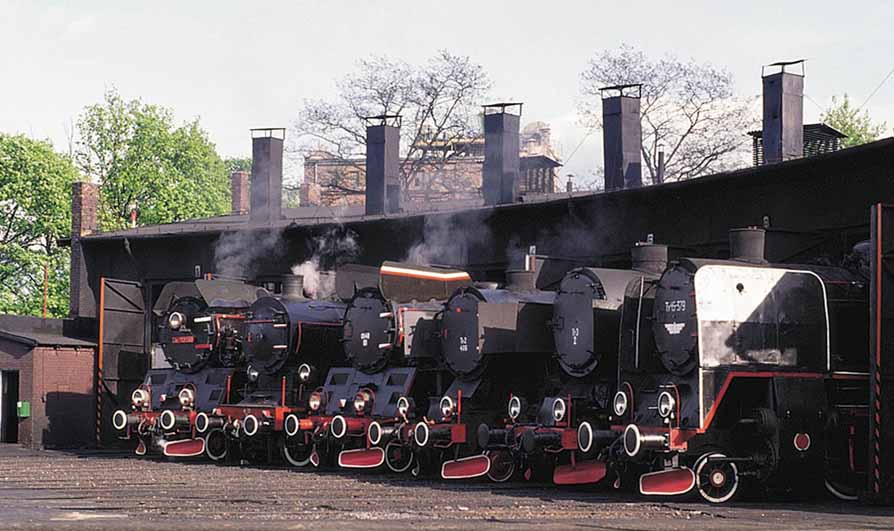
Visit to the Roundhouse in Wolsztyn. This is still an operational locomotive depot from which, each day, steam locomotives are sent out on scheduled services on the routes to Poznan and Leszno. The roundhouse was built in 1907 and continued to grow till the 1970’s. Currently there are about 30 items of rolling stock, unique locomotives and historic carriages. One of the most valuable is the “Beautiful Helena” locomotive, No. Pm36, dating from 1937 with a top speed of 130km/h.
Transfer to Wroclaw.
Dinner in a local restaurant or hotel.
Accommodation in a centrally located hotel in Wroclaw.
| Day 6 | > Wroclaw > Krakow |


Breakfast at your hotel.
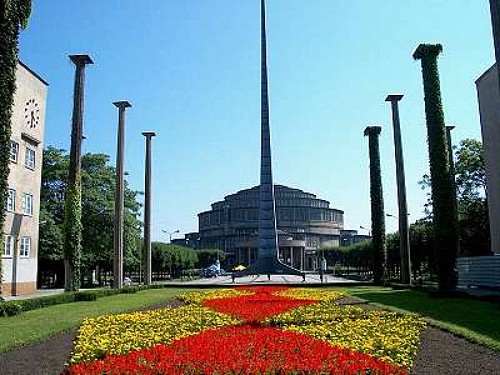
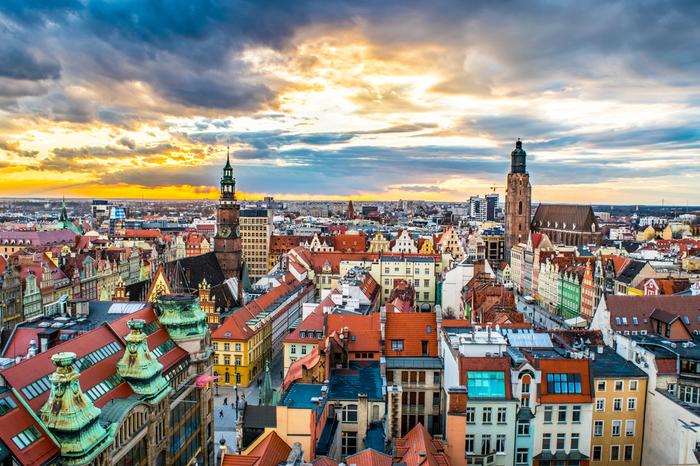
Welcome to magic Wroclaw – the city of 100 bridges. Its rich history and medieval character attracts millions of tourists every year. The sightseeing starts by the main entrance of the 13th century Cathedral of St. John the Baptist located on Ostrow Tumski island – the oldest part of Wroclaw. Walking along Odra river bank, we ascend the “Polish Hill” offering the splendid view over the city. Nearby there is the Panorama of the Battle of Raclawice Museum presenting one of the biggest 360o panoramic battle scenes in the world, nowadays one of the nation’s symbol. The next pearl on our route is Aula Leopoldina – representative baroque hall at the Wroclaw University. Stroll around medieval cobblestone streets leads to the Market Square, one of the largest in Europe, surrounded by old tenement houses with the gothic Town Hall in the centre.
Transfer to Wroclaw Glowny train station.
Travel by train to Krakow.
Arrival to Krakow Glowny train station. Transfer to the hotel and check-in.
Dinner in a local restaurant or hotel.
Accommodation in a centrally located hotel in Krakow.
| Day 7 | > Krakow |


Breakfast at your hotel.
Krakow is the cultural capital of Poland with Old Town listed as UNESCO Heritage. During the tour you would see Barbican and defensive walls with Florian’s Gate, the Main Market Square with Sukiennice Cloth Hall, St Mary’s Church and Town Hall Tower. We would proceed to the Jagiellonian University, pass by Archbishop Palace (where John Paul II used to live) as well as St Andrew’s Church and St Peter and Paul’s Church to reach the Wawel Hill.
We invite you to the culinary workshop of “obwarzanek, the traditional bajgle of Krakow. Perhaps “obwarzanek” will be the first thing you will try upon arrival to Krakow. In the Live Obwarzanek Museum you will attend a baking workshop in which you’ll bake your own Obwarzanek. These inconspicuous parboiled dough rings have been part of city’s history for over 600 years. Beloved by citizens, tourists and pigeons! It’s been known since medieval times – kings ate it, knights ate it, even Wawel’s dragon ate it! Learn more and discover what makes them unique during 1h long obwarzanki making workshop. Each participant gets a piece of dough and leaves with their very own obwarzanek.
Dinner in a local restaurant or hotel.
Accommodation in a centrally located hotel in Krakow.
| Day 8 | > Krakow > Auschwitz-Birkenau > Krakow |


Breakfast at your hotel.
Transfer to Oswiecim (Auschwitz-Birkenau)
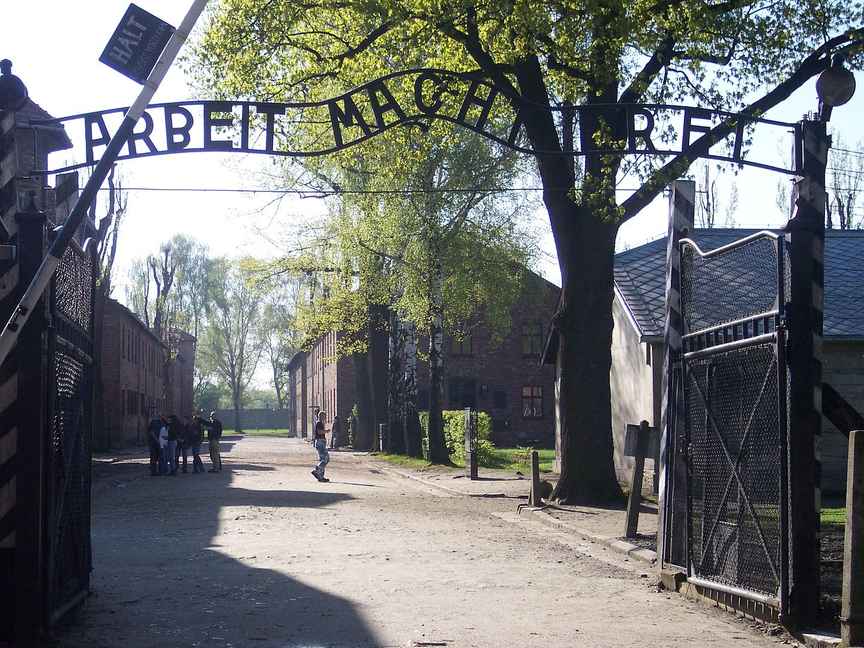
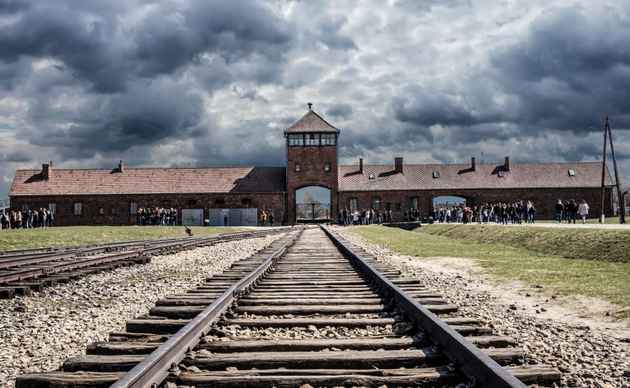
All over the world, Auschwitz-Birkenau has become a symbol of terror, genocide and the Holocaust. It was established by the Nazis in 1940, in the suburbs of the city of Oswiecim (Auschwitz in German) which, like other parts of Poland, was occupied by the Germans during the Second World War. A visit to concentration and extermination camp museum might help you to comprehend what incomprehensible. Transfer back to Krakow.
Dinner in a local restaurant with folk music.
Accommodation in a centrally located hotel in Krakow.
| Day 9 | > Krakow |


Breakfast at your hotel.
Transfer to Balice airport in Krakow.
END of SERVICES.
Contact us
If you want us to prepare a special trip for you, please write us specifying all your requirements. We will be happy to answer.
Poland on the Tracks – a unique railway journey across Poland combining travel, history, and hands-on experiences
If you are looking for a travel experience that goes beyond traditional sightseeing and transforms the journey itself into the main attraction, this railway-focused itinerary offers something truly distinctive. Designed for travelers who value both mobility and storytelling, this program allows you to explore Poland through its rail network while discovering the history, technology, and culture connected to trains.
Instead of treating transport as a necessity, this itinerary turns it into a central element of the experience. You travel between major cities by train, visit historic railway sites, and gain access to places that are rarely included in standard travel programs.
This is not just a tour—it is a thematic journey built around movement, engineering, and nostalgia.
What makes a railway-based tour fundamentally different from standard travel itineraries?
Most travel programs focus on destinations. This itinerary focuses equally on how you move between them.
The railway theme introduces:
- a different rhythm of travel compared to buses or cars
- access to historical and operational railway locations
- experiences connected to technology and transport history
- a narrative that links destinations through infrastructure
This creates a more immersive and dynamic journey, where transitions between cities become meaningful parts of the experience.
Travel by train as a core part of the journey
Throughout the itinerary, trains are not only used for transport but also as a way to experience Poland from a different perspective.
You travel between key cities such as Warsaw, Poznań, Wrocław, and Kraków using rail connections that reflect real travel conditions across the country
This approach allows you to:
- observe changing landscapes between regions
- experience travel in a more relaxed and scenic way
- avoid the logistical complexity of road transport
- connect cities in a natural and historically relevant way
Rail travel becomes part of the narrative, not just a means to reach the next destination.
Railway heritage and hands-on experiences
One of the strongest elements of this program is its focus on real railway heritage.
Along the route, you encounter:
- historical railway museums with original equipment
- preserved locomotives and carriages
- operational depots where steam engines are still in use
- narrow-gauge railways that reflect older transport systems
In some locations, you can even engage directly with railway environments and explore how they function in practice
This adds an interactive layer that is rarely available in standard tours.
From modern cities to historical rail infrastructure
The itinerary balances urban exploration with technical and historical experiences.
You begin in Warsaw, where modern rail infrastructure meets historical heritage, including museum collections located in former railway stations. From there, the journey expands into regions where railway history is still visible in daily operations.
Destinations such as Wolsztyn introduce working steam locomotive depots, while smaller towns reveal the role railways played in regional development.
This combination allows you to see both the past and present of railway systems in Poland.
Narrow gauge railways and regional travel traditions
One of the most unique elements of the itinerary is the inclusion of narrow gauge railway experiences.
These historic lines once served as essential transport systems for local communities, connecting villages, transporting goods, and supporting regional economies.
Today, they offer:
- a glimpse into historical travel methods
- a slower and more atmospheric way of moving through landscapes
- access to locations that are not part of modern transport networks
This adds a strong experiential dimension to the journey.
Industrial heritage and engineering perspective
Railways are not only about travel—they are also about engineering, industry, and technological development.
This program includes elements that highlight:
- historical railway construction and design
- evolution of locomotives and transport systems
- infrastructure that shaped economic growth
- technical environments rarely accessible to general tourists
For travelers interested in engineering or industrial history, this adds significant value.
Cultural and historical context beyond the railway theme
Although the railway concept is central, the itinerary also includes major cultural and historical destinations.
You experience:
- Warsaw as a symbol of resilience and modern development
- Poznań as one of the oldest Polish cities
- Wrocław with its unique urban layout and multicultural past
- Kraków as the cultural capital of Poland
This ensures that the journey remains balanced and not limited to a single theme.
Workshops, local experiences, and interactive elements
Beyond sightseeing, the itinerary includes opportunities to actively participate in selected experiences.
These may include:
- workshops connected to local traditions
- interactive museum visits
- cultural activities that complement the railway theme
This transforms the program into a more engaging and memorable journey.
Who is this tour designed for?
This itinerary is particularly suitable for:
- railway enthusiasts and transport history fans
- travelers looking for unique and thematic experiences
- people interested in industrial heritage and engineering
- those who want a different perspective on Poland
At the same time, it remains accessible for general travelers who simply want a more original way to explore the country.
Travel comfort, logistics, and coordination
Even though the journey involves multiple train transfers, the itinerary is fully structured to ensure smooth travel.
This includes:
- coordinated train connections between cities
- accommodation in central locations
- balanced daily schedules
- support in managing transitions between destinations
This level of organization ensures that the experience remains comfortable despite its dynamic nature.
Why railway travel creates a deeper connection with the journey
Unlike other forms of transport, trains offer a different relationship with distance and time.
You are not isolated from the environment. Instead, you observe how landscapes change, how regions connect, and how infrastructure shapes movement across the country.
This creates:
- a stronger sense of continuity
- a more immersive travel experience
- a deeper understanding of geography and regional diversity
For many travelers, this becomes one of the most memorable aspects of the journey.
How to decide if this itinerary is right for you
Choose this program if:
- you want something different from standard tours
- you are interested in the journey itself, not just destinations
- you enjoy thematic travel experiences
- you value a mix of history, culture, and technology
It is one of the most distinctive ways to explore Poland.
FAQ
Is this tour only for railway enthusiasts?
No, although railway fans will particularly enjoy it, the program is designed to be accessible and engaging for all travelers.
Do I travel exclusively by train?
Train travel is a core element, but some transfers may include other forms of transport for efficiency.
Are railway sites open to visitors?
Yes, the itinerary includes locations that are accessible and adapted for visitors, including museums and operational sites.
Is the program intensive?
The itinerary is dynamic, but structured to maintain a comfortable pace.
Can this tour be customized?
Yes, elements of the itinerary can be adjusted depending on preferences.